
Emma
-

Stars and Radiation
Stars are hot. Really hot. Hot enough to have energy to spare for their planets. If our star wasn’t hot, we couldn’t live on Earth. And our star isn’t even particularly hot for a star. It’s a middle-aged star of…
-

Atoms and Radiation
Everything we know about space comes from radiation. Now wait just a moment here. That statement explains how astronomy is such a successful field of science — it’s based entirely on the information we can glean from radiation, after all.…
-

How Atoms Work
Have you ever seen something like this? I’m going to venture a wild guess and say you haven’t, since scientists have only recently been able to take this kind of image. I learned about it in my biology class this…
-
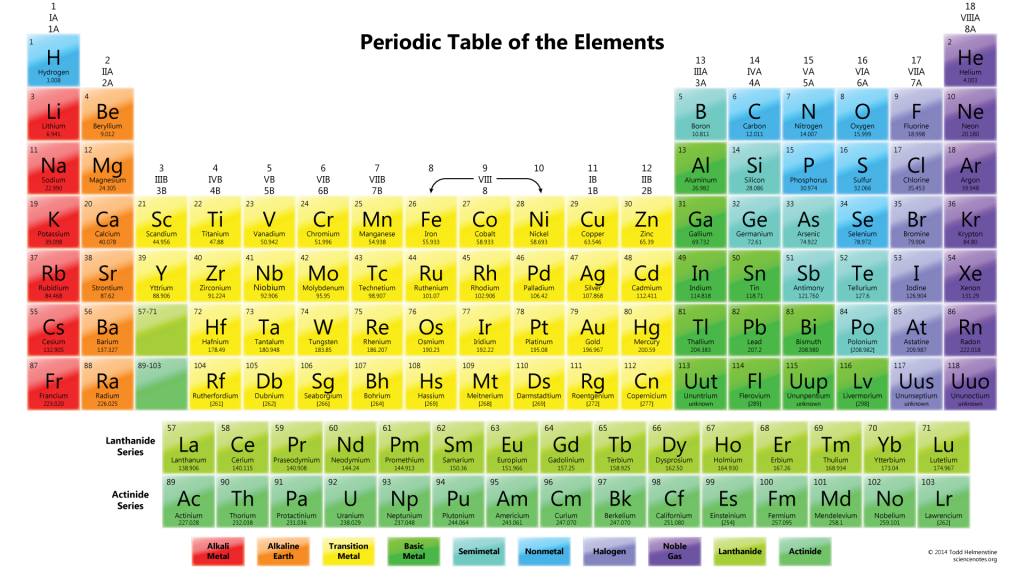
Types of Atoms
Does this look familiar? It might, or it might not. If it does, you might recognize it as the periodic table of the elements — more often known as simply the “periodic table.” It’s an ingenious way to organize elements…
-
The Building Blocks of the Universe
“The Building Blocks of the Universe.” When you put it that way, atoms sound less like a topic specifically for a chemistry class and more like something astronomers might discuss. They really are. I’ve got a fantastic reason to include…
-

Cosmic Rays
Cosmic rays remain, for the most part, a cosmic mystery. But then, what about the universe doesn’t still remain partially shrouded in mystery? Cosmic rays are radiation, but they’re not electromagnetic. That is, they’re not on the electromagnetic spectrum. So,…
-

Infrared & High-Energy Astronomy
You probably recognize this image. You see something like it whenever you look up at the sky. Some days are clearer than others — some, you might even see a completely blue sky — but regardless, you know that this…
-
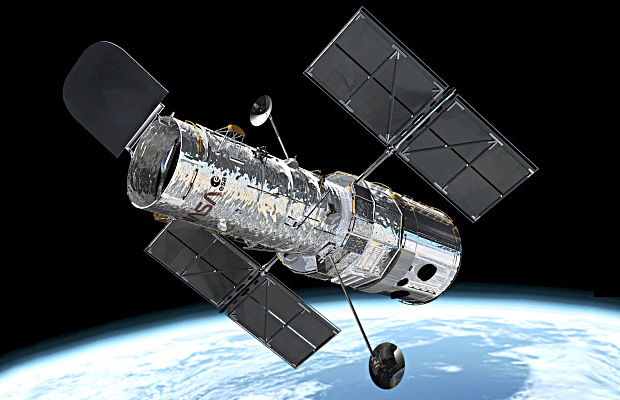
The Hubble Space Telescope
The Hubble Space Telescope is one of the most famous telescopes in the world. Oops, excuse me — one of the most famous telescopes built. Hubble, after all, is certainly not in this world. Unless you call the universe the “world,”…
-

Radio Astronomy: Advantages
Whoa…what’s this thing? It’s a radio telescope, the largest in the world. It’s so huge that a normal support system can’t support its weight. So it’s basically suspended between three mountaintops. It’s 300 m across, which is 1000 feet. It’s…
-

Radio Astronomy: Limitations
Astronomy is a labor of love, and radio astronomy is no different. As I covered in my last post, radio astronomy deals with the longest wavelengths of the electromagnetic spectrum (a spectrum that includes visible light). Radio waves are not sound…
