emission spectrum
-
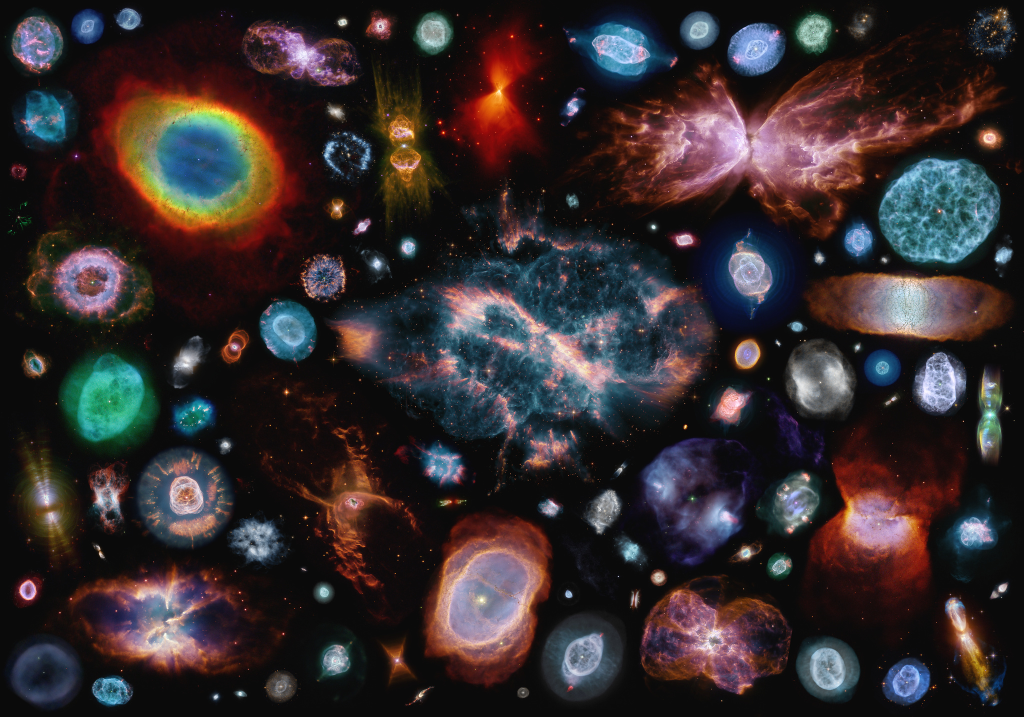
What are Planetary Nebulae?
Meet the planetary nebula, one of the universe’s most gorgeous phenomena. If you’ve ever looked through a telescope, you may have seen one of these before. Through a small telescope, one might look like a little planet — hence the…
-

From Cold Cloud to Hot Protostar
Paradoxically, stars begin in the galaxy’s coolest places: the dense giant molecular clouds (or GMCs). This is not quite the paradox it seems, as in the beginning, stars require little else but gravity to form. And that’s really quite lucky, because…
-
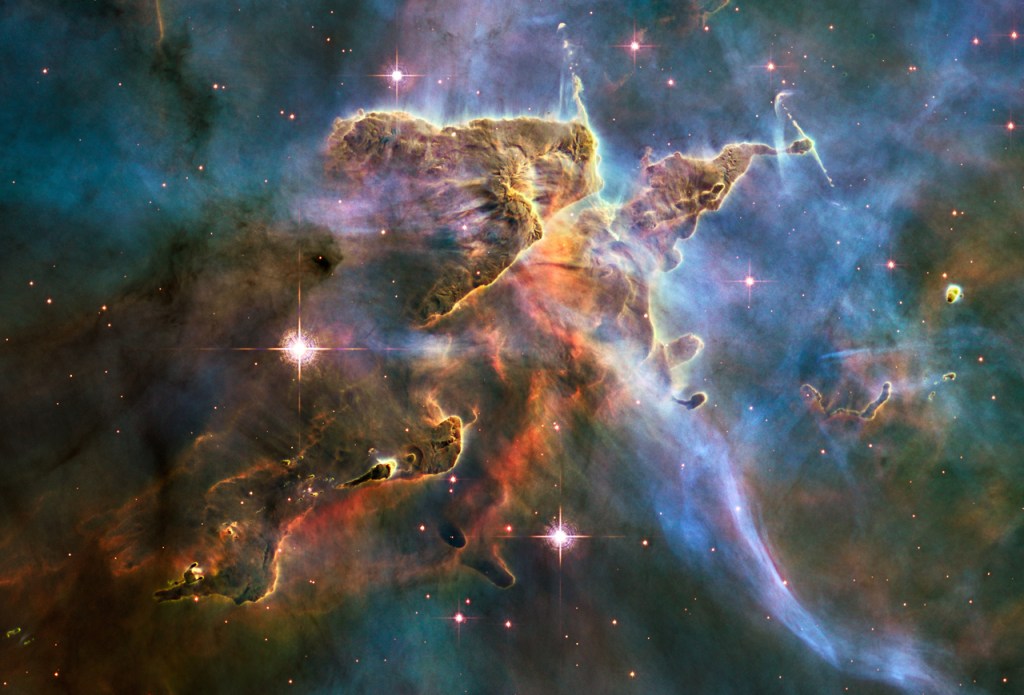
Interstellar Spectra
I often refer to what we call the interstellar medium as the galaxy’s “backstage,” and I do that for a reason: for the most part, we can’t see it. The backstage of any theater isn’t part of the show. You, as…
-
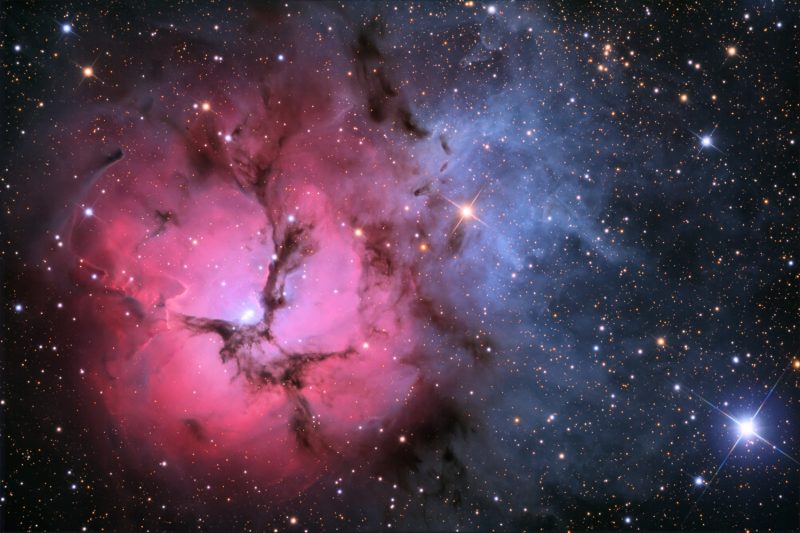
What is a Nebula Made of?
What you see here is the Trifid Nebula, a vast cloud of gas and dust in space. In my last post, we explored why it looks the way it does. We discovered that the pink hues of emission nebulae are caused…
-
What is a Nebula?
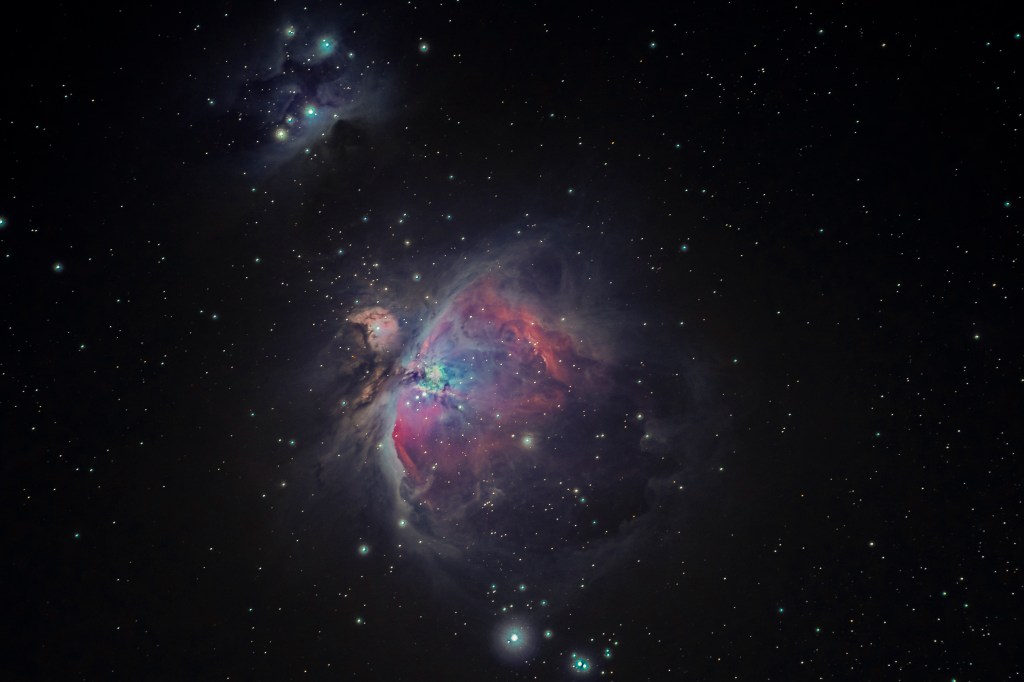
What’s a nebula? Well…you’re looking at one. Okay, okay, I know. You want to know what that actually is. You want to know why it’s there. You want to know why there are colors in space…and why you’ve never noticed…
-

Our Sun: The Chromosphere
This diagram is a tiny bit misleading. Here, it looks like the chromosphere is the visible surface of the sun, with the photosphere just below. Really, we never see the chromosphere. If you ever look through a solar telescope at…
-
The Atomic Spectrum
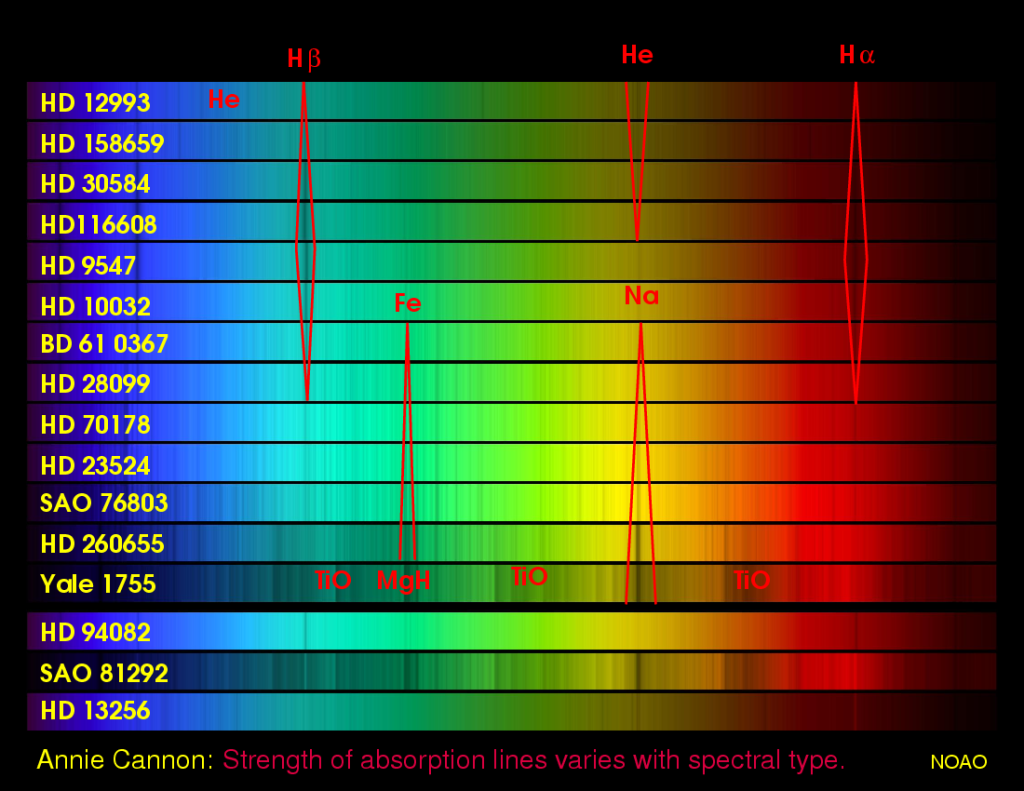
Astronomers know that if white light passes through a prism and is bent, it’s separated out into its component colors — the colors of the rainbow. Astronomers also know that when light interacts with atoms, the building blocks of the…
