supernova remnant
-
Exploring the Milky Way’s Nucleus
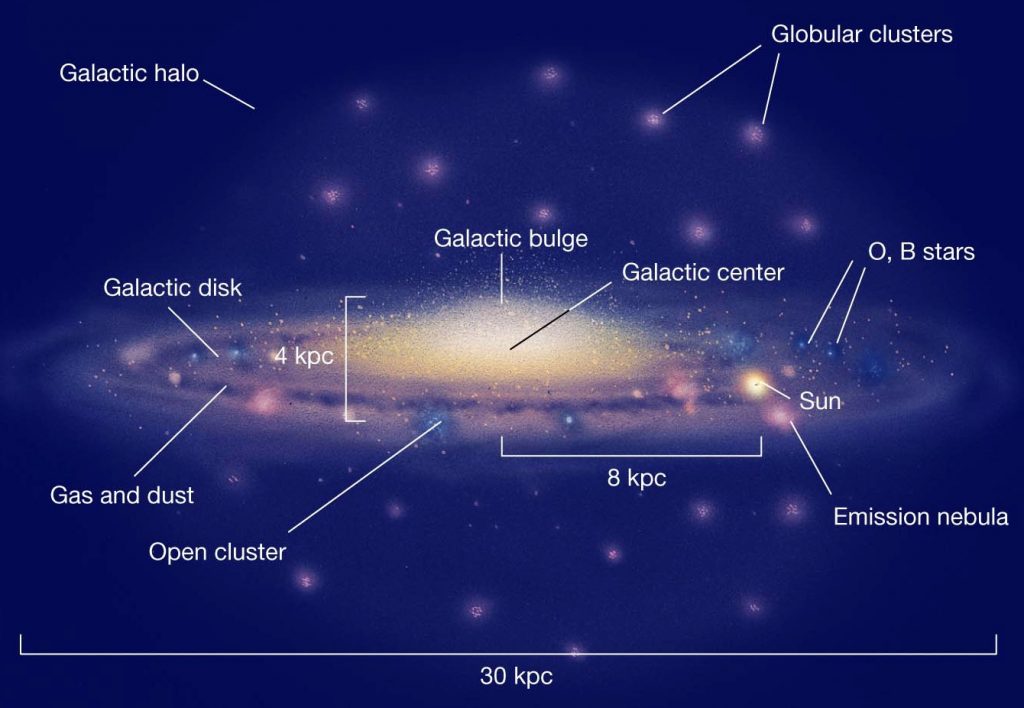
Here is an edge-on illustration of our Milky Way Galaxy. (Keep in mind that the disk actually stretches quite a bit farther out from the budge than is apparent in this illustration. Proportionally, its full diameter makes its thickness less…
-

Unique Neutron Stars
Neutron stars — the compact remains of massive stars that have gone supernova — are some of the most extreme objects in the universe, narrowly beaten by black holes (and, as we’ll talk about in future posts, active galaxies and…
-
Pulsars as Neutron Stars
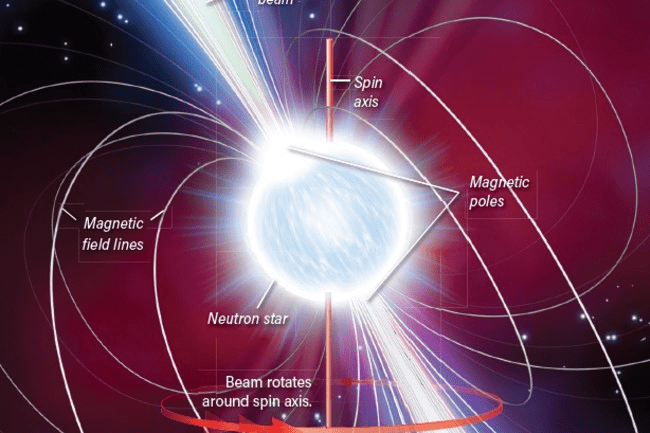
For those of you who missed my last couple of posts, allow me to introduce the neutron star: a stellar remnant similar to a white dwarf, but much denser, so dense that its protons and electrons have combined to form…
-

What is a Pulsar?
Imagine you’re observing the sky with a radio telescope. Observing the faintest, lowest-energy photons the universe has to offer is your specialty. You study interstellar dust clouds, protostars, and lots more. One day, though, something interesting pops up in your…
-
Why Neutron Stars Should Exist
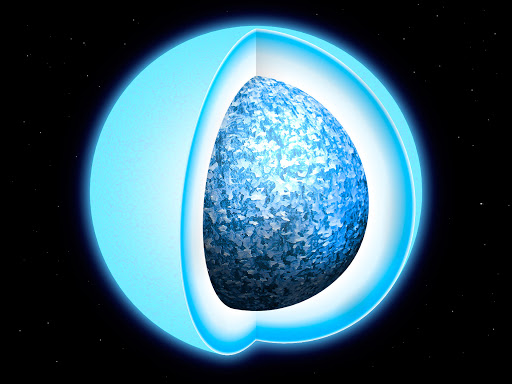
Above is a theoretical rendering of a white dwarf, the collapsed husk of a low-mass or medium-mass star. Interestingly enough, these strange cosmic objects — which begin their existence as intensely hot balls of carbon the size of the Earth…
-

What Exactly are Supernovae?
This is one topic I bet you guys have been looking forward to since I first started posting about stellar evolution. Well, I won’t disappoint you! In my last post, we covered how a massive star gets to the point…
