supernovae
-
The Composition of the Milky Way
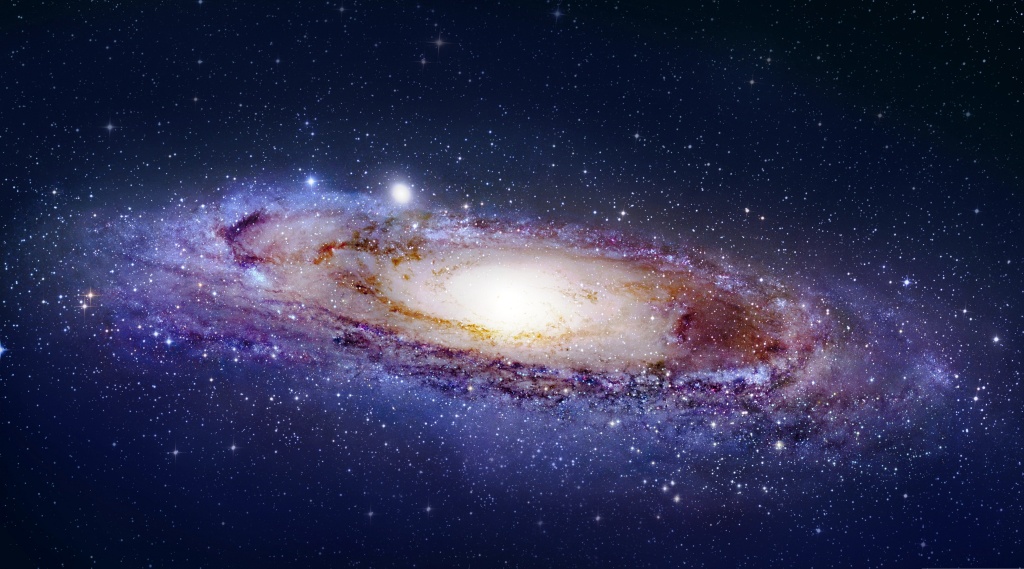
What is our home galaxy made up of? In the broadest sense, it’s made up of stars, clouds of dust and gas, and the mysterious dark matter. We could also get a little more detailed. We could say that it…
-

Unique Neutron Stars
Neutron stars — the compact remains of massive stars that have gone supernova — are some of the most extreme objects in the universe, narrowly beaten by black holes (and, as we’ll talk about in future posts, active galaxies and…
-
Pulsars as Neutron Stars
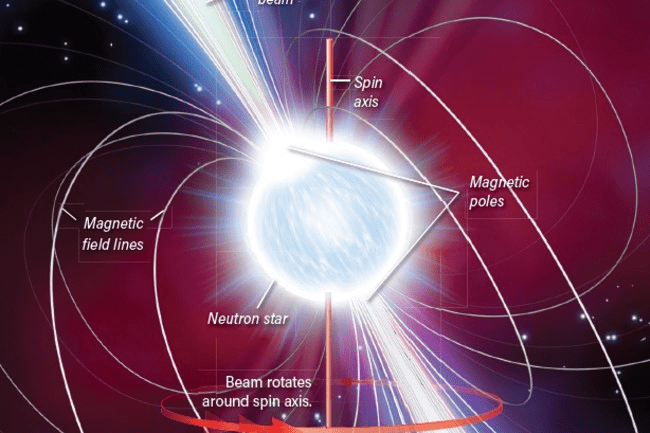
For those of you who missed my last couple of posts, allow me to introduce the neutron star: a stellar remnant similar to a white dwarf, but much denser, so dense that its protons and electrons have combined to form…
-
Why Neutron Stars Should Exist
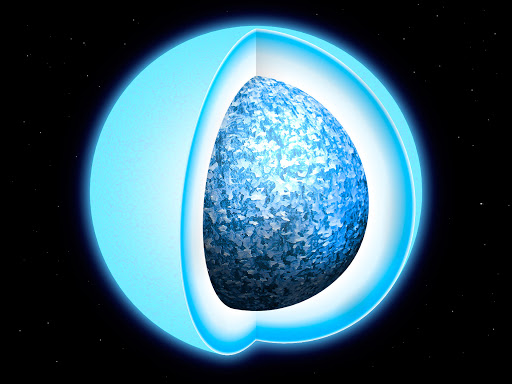
Above is a theoretical rendering of a white dwarf, the collapsed husk of a low-mass or medium-mass star. Interestingly enough, these strange cosmic objects — which begin their existence as intensely hot balls of carbon the size of the Earth…
-

How Massive Stars Die
When people think of star death, they most often think of supernovae (plural for supernova). So why haven’t I spent the past bunch of posts on star death talking about them? Because supernovae are not actually the most common fate…
-

What is Coronal Gas?
Stars are hot. Space is cold. We’re all familiar with that, right? Ok, good. Technically, it’s more complicated than that. Space isn’t completely frigid — absolute zero, the temperature at which there is no heat whatsoever, is purely theoretical and not…
