We have a bit of a shorter post today — I thought precession warranted its own post, before I go on to talking about the ecliptic.
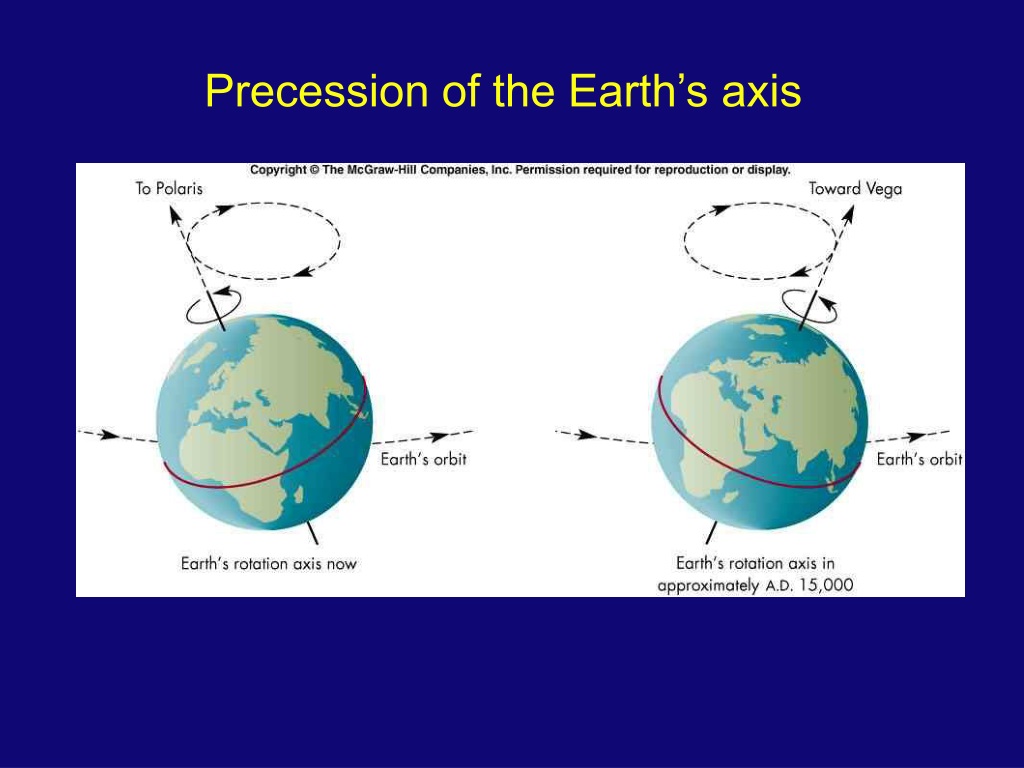
Precession refers to the way Earth wobbles around on its axis, a bit like a top. This motion is caused by the sun and moon’s gravity tugging on the planet, and is key to understanding how many ancient cultures viewed the sky.
So what is precession, exactly?
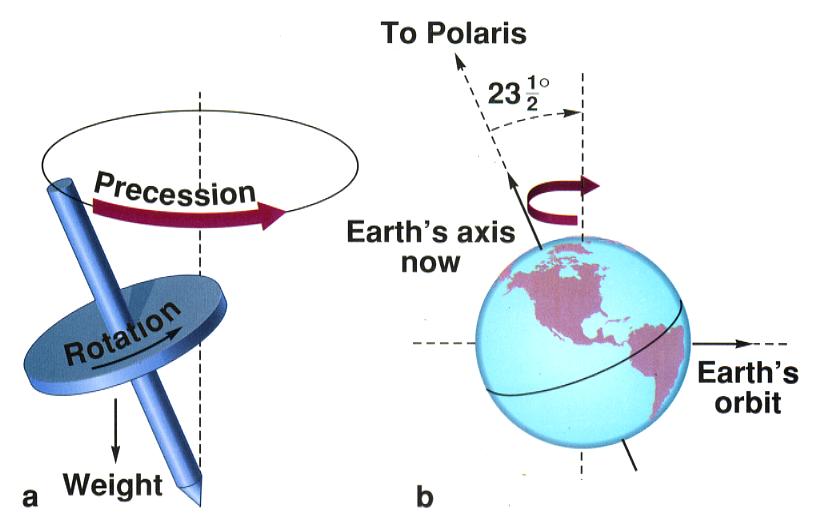
When you spin a top, slight imperfections in its momentum and balance prevent it from spinning like, say, a fan or a windmill. (Although, to be precise, fans wobble a bit as they spin, too.)
Instead of spinning perfectly and staying perpendicular to the surface it’s spinning on at all times, the top wobbles.
Earth does the same thing, but not because of imperfect balance. There’s nothing for it to balance on — it’s spinning in empty space. The moon’s gravity causes it to wobble a bit, and the tides create friction too, though I’ll explain that in a later post.
So, what does this mean for astronomy?
The North Star, as we call it, isn’t a specific star. It just refers to whatever star the North Pole happens to be pointing at. Now, you might say that the north pole is always pointing at the same star. But, thanks to precession, this isn’t true.
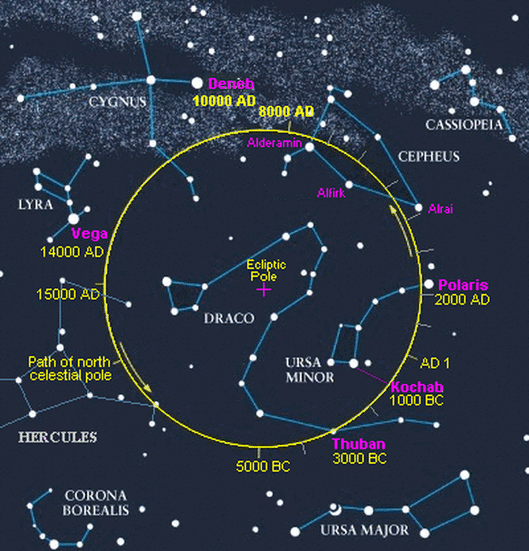
This image diagrams the path the North Pole traces in the sky as it wobbles about in a circular motion. Also shown here are the stars that cross the North Pole’s path in the sky.
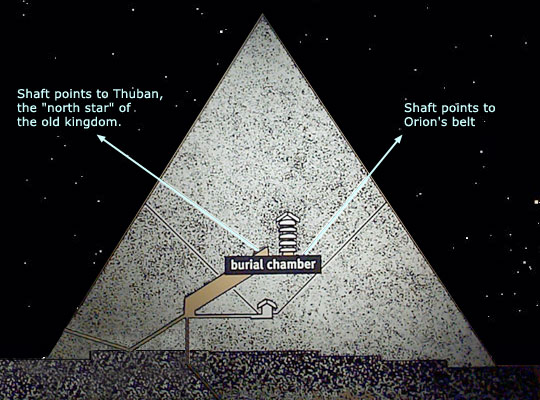
When the pyramids of Giza were built, Thuban in the constellation Draco was the closest star to true north — and, in fact, it was closer to north than Polaris is now.
Polaris, our current north star, was named for its location — Polaris. But it won’t always be the North Star. 6000 years from now, the star Alderamin will appear closest to the North Pole, and in another 6000 years, the North Star will be Vega.
Earth isn’t the only astronomical body that precesses. But it is the only one that humanity has observed for more than seven thousand years.
There are pyramids built in Egypt that are all pointed, more or less, at the star Thuban. Because these pyramids were built when Thuban was the North Star, it’s reasonable to assume that they were meant to point north.
And it’s even evident, from how many were built and the slow progression from being off by a few degrees to being almost dead on, that this was done on purpose. It’s pretty clear evidence that the ancient Egyptians, at least, cared deeply about the night sky.
Now, I could go on for ages about the mounting evidence that ancient peoples were fascinated by the night sky, but that’s a topic for another day.
You may have noticed that in order for Earth to wobble on its axis, it has to be tilted a little bit instead of exactly upright. Otherwise, it would just spin perfectly. It is indeed tilted — about 23.5° from the vertical.
Precession doesn’t happen just because of the sun and moon’s gravitational forces — it also happens because Earth has a bit of a pudge around its middle.
That’s right. Because Earth rotates, its middle at the equator actually bulges out a bit. Why? It’s the same effect as when dancers spin really fast. If you’ve ever tried a fast spin, dancer or not, you’ve probably noticed that it takes more effort to hold your body in a straight line, and not spread your limbs out.
Because Earth has no muscles or consciousness to control its shape, its spinning motion makes its middle pull out a bit. It also helps that most of the surface is ocean — water is much more flexible than land.
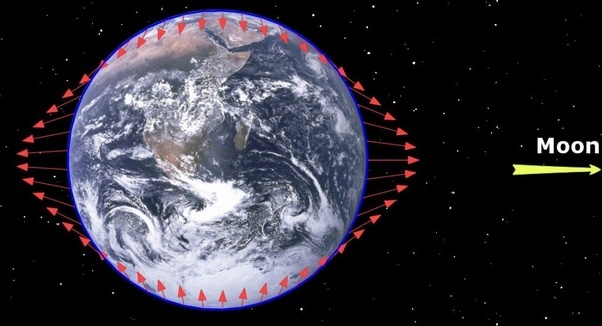
This bulge helps the sun and moon’s gravity work. It’s like someone trying to grab you while you’re spinning like a pencil, versus someone grabbing you when your arms are thrown out. They have more to grab onto.
Regardless of a planet’s midlife pudge, precession takes a long time. It’s the difference between a person literally grabbing you as you spin and tipping you over a bit, and the moon and sun’s gravity acting from afar.
I’ll explain gravity in more depth in later posts…but basically, because gravity is an effect of space and doesn’t involve objects directly acting upon one another, precession takes about 26,000 years for one cycle.
Yeah, just one. That’s why you don’t notice it all. In fact, our generation — and even our kids — won’t be around to greet the next North Star.
But ancient peoples were, and that’s why it matters. And there’s another reason it matters, too. Precession has an effect on our global climate, and is often used as part of an argument against global warming.
I’ll be talking about that later as well, and explaining why precession is absolutely not proof that global warming is false or exaggerated.










Leave a reply to Marian Brown Cancel reply