
I’m going to venture a guess that you’ve heard of astrology.
As an astronomy enthusiast, I run into people who confuse astronomy with astrology all the time. They’re particularly prevalent at work (I don’t work among fellow astronomy geeks at the moment), but my beef is with the fact that I can add “astrology” as a hobby on Facebook, but for some bizarre reason, “astronomy” is not an option…
Anyway.
There is one critical difference between these two:
Astronomy is the study of the universe.
Astrology is a pseudoscience.
But…what is a pseudoscience?
A pseudoscience is a set of beliefs that seem to be based on scientific ideas, but really, they fail to obey even the most basic rules of science.
The absolute most basic rule of science is that any claim must hold up to tests before it is considered scientific knowledge. For example, you can test whether a plant grows from a seed by planting one and watching what happens.

In this case, the “test” is watching the plant grow in conditions where you can be around to observe it. You accept it as proven and true when the plant grows from the seed as predicted, time after time.
Of course, there are times when the plant doesn’t grow from the seed. But those times just tell us that there’s a chance germination, as it’s called, won’t work.
Astrology is far from the only pseudoscience. In the 1970s, there was a claim that pyramidal shapes focus energy from the cosmos on anything underneath, and even have healing properties.

The people who believed this even suggested that pyramids made out of different materials could preserve fruit, sharpen razor blades, and do other miraculous things.
Several tests were performed to confirm this belief. It was found that absolutely any shape protects food from airborne spores and allows it to dry without rotting. And any shape can allow oxidation to sharpen the cutting edge of a razor blade.
The belief that pyramids had more powers than any other shape could have survived as a form of religion, but the people making the claim insisted it was a science long after science itself proved their claim untrue. That makes this a pseudoscience.
Any belief that claims to be based on science but doesn’t hold up to scientific tests is a pseudoscience, not a real science.
Astrology is one such pseudoscience, and it’s possibly the oldest one. It’s actually based on the ecliptic, the apparent path of the sun across the background of constellations in the sky.
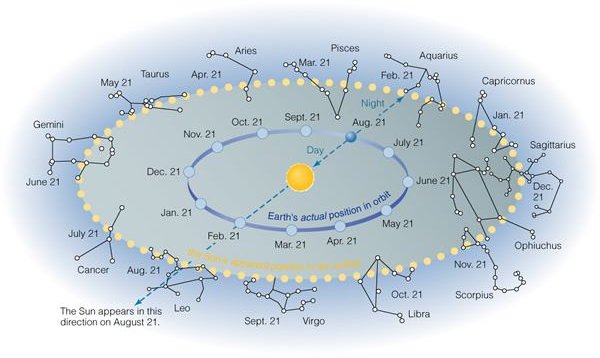
If you’re familiar with astrology, you’ll notice the constellations along the ecliptic shown here as the signs of the zodiac.
Have you ever noticed that people who were born in August, “under” the sign of Leo, don’t actually see Leo in the night sky that month?
That’s because Leo the Lion, a constellation, is on the other side of the planet on August nights. If the sun weren’t so bright, we would see Leo during the day — and the sun would appear right in the stars of Leo.
An important part of astrology is the zodiac, a band around the sky extending 9° above and below the ecliptic. The constellations along the ecliptic are known as “signs” of the zodiac, and when we say we were born “under” one of them, we mean that the sun appears “in” that constellation during our birthday month.
All this is true. It’s inaccurate to call constellations “signs” and to say we were born “under” one of them, but the sun does pass through these constellations. So why is astrology a pseudoscience?
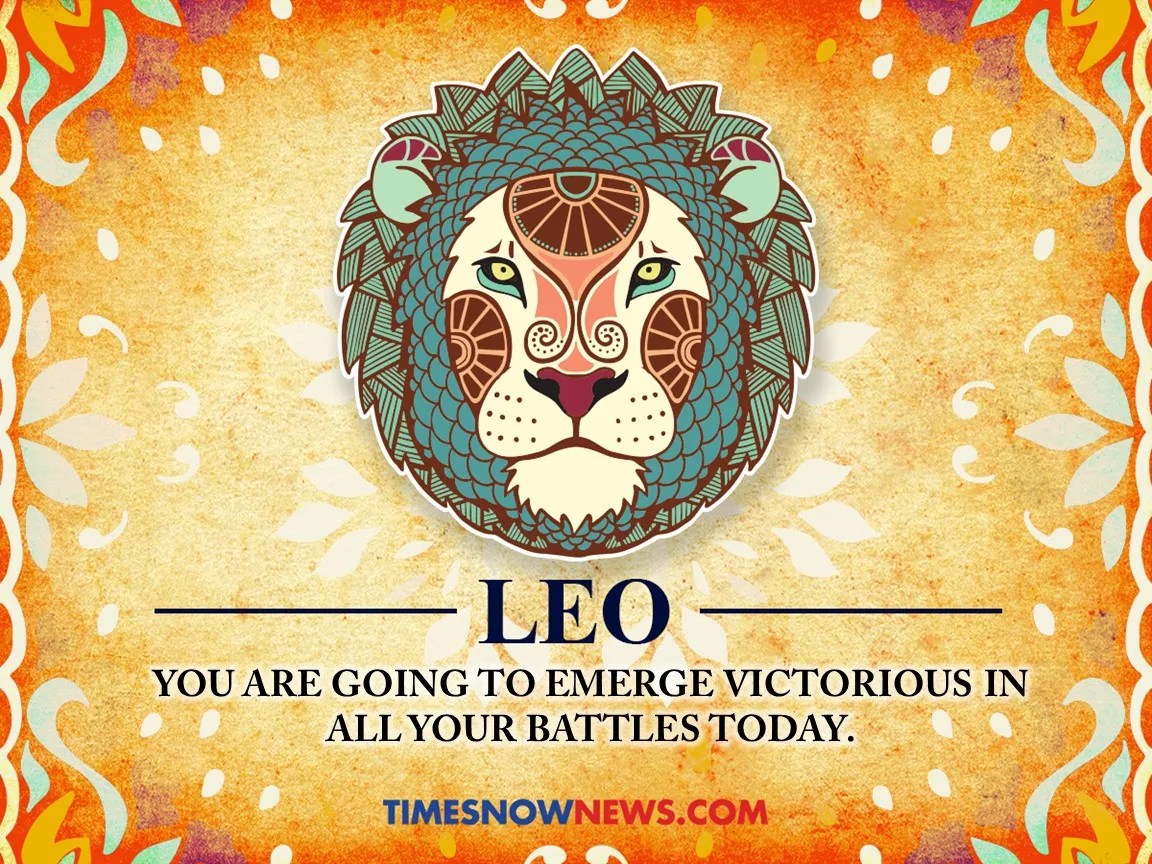
Astrology uses “horoscopes” to predict people’s personalities and lives by what “sign” they were born under.
Horoscopes claim to examine the positions of the sun, moon, and planets within the zodiac. Because the planets are named after Greek and Roman gods, horoscopes use the roles of the gods themselves to guess at peoples’ personalities and upcoming events in their lives.
Some people genuinely believe in astrology and are interested in horoscopes. I don’t begrudge you if you do. My only point is that it is not a science; it’s a pseudoscience.
I could spend hours picking out examples across the web of what makes astrology absolutely unprovable by scientific means. But here are just a few examples.
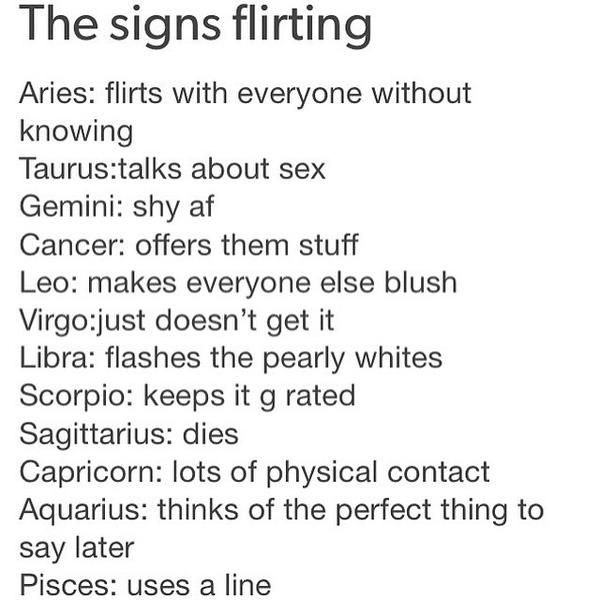
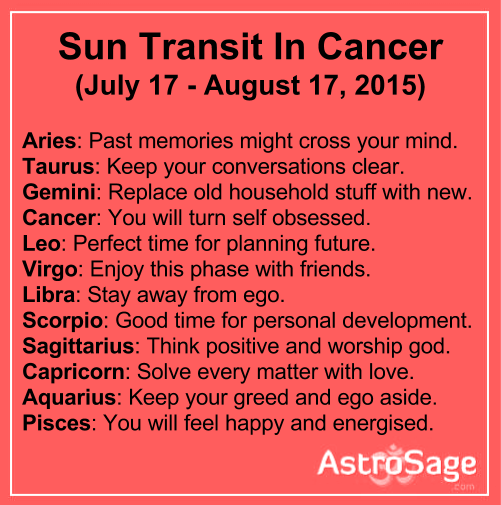
I was born in the beginning of August; astrology, therefore, would have me believe that I am a “Leo.”
But “makes everyone else blush” sounds like the absolute furthest thing from my actual personality that I’ve ever heard of.
I read up on Leo’s supposed traits, just out of curiosity…apparently us Leos put a high priority on love. As in, it’s one of our “favorite things in the world,” and we “will always make sure that there’s plenty of time for passion”…
(Credit link at the bottom, as unobtrusive as I could make it; I hardly want to draw attention to an astrology site on a science blog 😉 )
No.
My first priority is my education and my future career in academia. I’m not looking for love. If I do fall in love one day, I will not make a commitment to someone — legally or otherwise — unless it is 100% compatible with my goals in academia. That’s the life I choose for myself.
Not so Leo-like, after all, huh?
Okay, so I do have some Leo-esque traits…

Leo is described as confident, perhaps to a fault. The Leo is passionate, bringing “fiery intensity to everything they do … and when they believe in what they’re doing, there’s no stopping them…”
Well, no doubt about that. You see it in this blog, my passion project. You see it in my determination to succeed as an astrophysical researcher despite years of setbacks.
But…even the example above categorizes multiple star signs as being similar to Leo in this regard.
And I share traits with other star signs that are, purportedly, not my own.
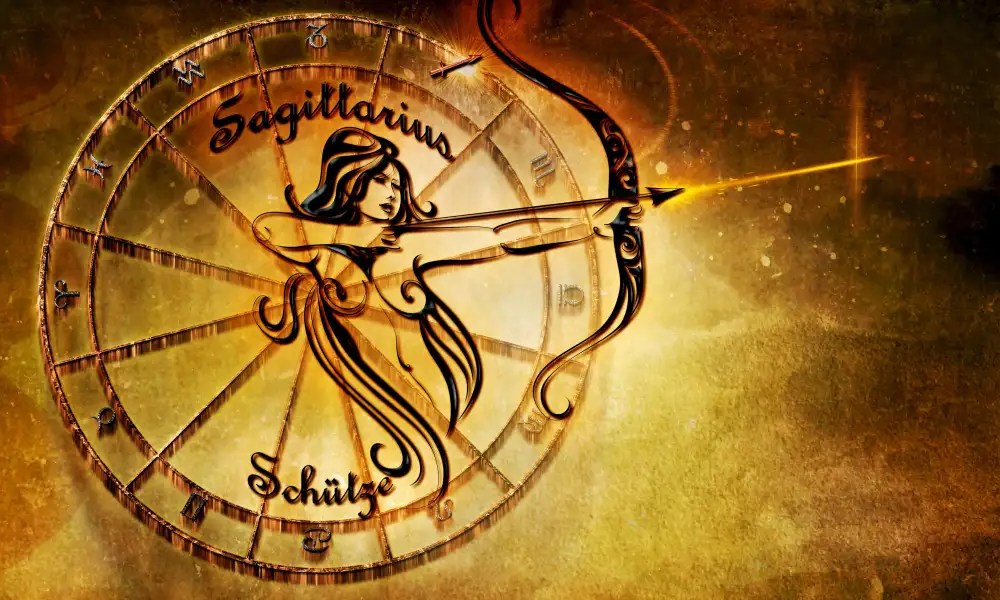
Sagittarius is described as “adept at blazing their own paths … and has a strong sense of self that allows them to always feel sure-footed, even where others may be unsure or insecure.”
Yup. Sounds about right.
And I also once knew someone who was the polar opposite of their star sign, in critical ways. This person was a “Pisces,” apparently a star sign that “knows things from deep within, and can often judge whether a person or situation is good or bad” but is also “deeply intelligent” and does not ignore “the logical part of their brain.”
I have never known someone to be more wrong about people, or more prone to illogical thinking.
Pisces is also described as “quiet,” but “great people to ask for advice on pretty much anything.” They are apparently “accepting and nonjudgmental of all.”
Again…I have never known someone to have such consistently terrible advice, or to be so judgmental.
But then, in some ways, the person I knew lines up with the horoscope:
A Pisces can feel like a great friend — until you consider how much you actually know about them.
Yeah. Tell me about it. 🙄
One fundamental aspect of science is that we can build on the existing body of evidence to predict future observations. Our predictions are rigorously tested and reviewed by many experts. If they consistently hold true, they’re accepted; if they fail, they’re modified or discarded.
Astrology does not do this. It constantly makes predictions about people’s lives, but makes no effort to verify or modify those predictions.
I could spend hours asking scientists how they align with the signs, and showing you how many people can have qualities associated with several different signs.
But does any of that matter? No.
Astrology is a pseudoscience because no matter how many holes you punch in its beliefs, it doesn’t correct or abandon them. It claims to be a science, but it’s not. And there’s nothing I can say scientifically that will change astrology.
Because astrology is a pseudoscience, and it refuses to acknowledge opposing evidence.
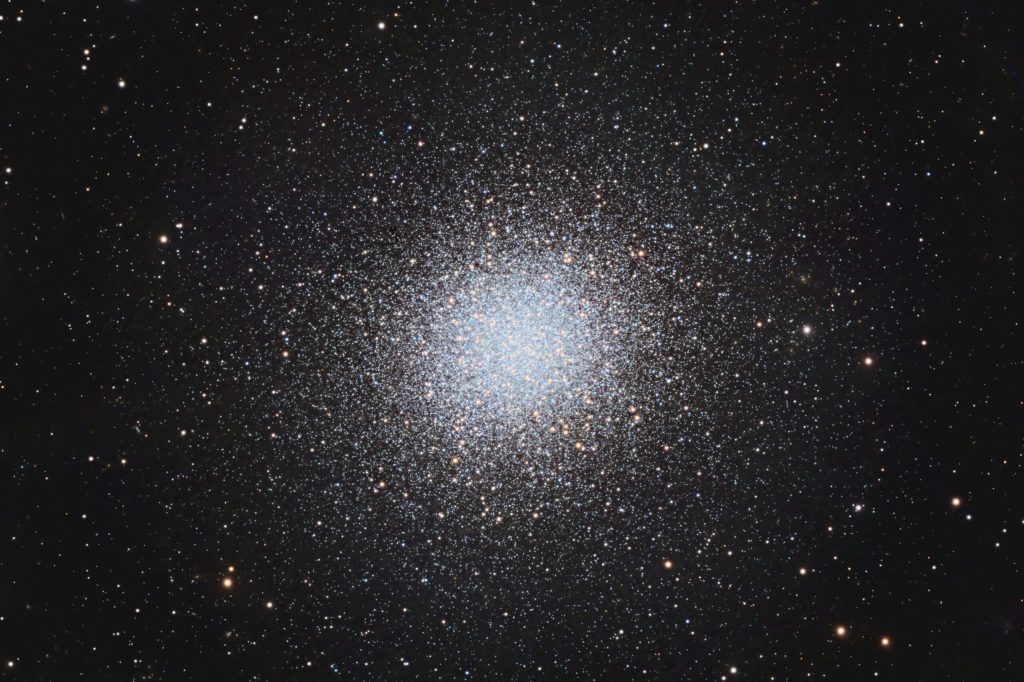
Astronomy, on the other hand, is the science of the universe and where we came from — and the central focus of this blog.









Did I blow your mind? 😉