

I remember something my ninth grade advanced biology teacher told our class. It was essentially a story about an invisible dragon.
Now why, you ask, would a biology teacher teach us about an invisible dragon?
Her message had nothing to do with the dragon, and everything to do with the lengths one of the story’s characters went to in order to disprove the dragon’s existence. Her intention was to help her students distinguish between evidence and belief.
On a broader level, her intention was to show us the difference between science and religion.
Most of my science teachers, growing up, just made a general announcement on the first day of class: that students were still free to believe whatever they believed, no matter what science the class taught.
But my biology teacher told us a story that continues to impact me to this day…

A man tells his neighbor that he has a dragon in his garage.
The neighbor asks to see it.
The man responds that he can’t. The dragon is invisible.
The neighbor replies that he will splash paint in the air, and if it lands on the dragon, then he will know that it’s there.
The man replies that, unfortunately, the dragon has a special coating on his scales that makes paint slip right off. It won’t stick or even land.
The neighbor suggests several other ways to test for the dragon’s presence — ways that, in science, would be known as indicators. Indicators show that something exists or that a process is happening, even if the thing or process is invisible.
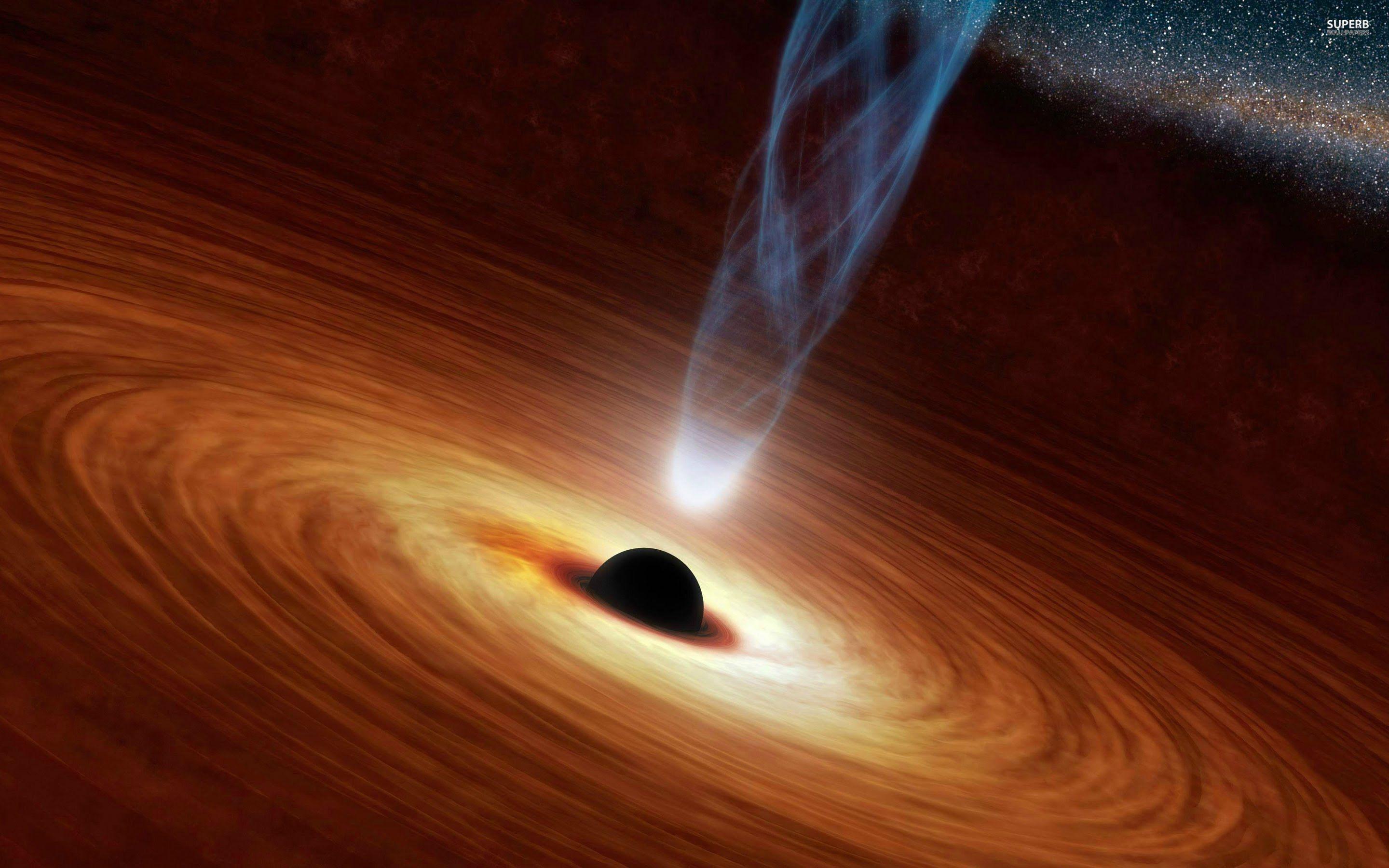
Indicators, for instance, are scientists’ main way of observing theoretical phenomena — such as black holes.
Well, it turns out, the man claims that all of the neighbor’s indicators wouldn’t work with the dragon. It’s special, and it can deflect all of these attempts to reveal its location.
I ask you, then, does the dragon exist?
We don’t know.
We can’t know.
There is no way to prove that the dragon exists, because no indicators will work.
But isn’t there a possibility that the dragon exists?
Yes, because in science, it’s impossible to prove a negative. You can’t prove that the dragon doesn’t exist.
That’s the difference between religion and science. The man believes he has a dragon in his garage. The neighbor cannot prove it. Scientifically, the dragon’s existence cannot be proven, but it can be believed.
And this difference — this very, very simple difference — is ignored far too often.
The difference between belief and proof is the main hindrance to some people when trying to understand global warming…

When it comes to global warming, the term “debate” is a misnomer. There is no debate. There is a scientific consensus due to an overwhelming–and growing–body of evidence that it is a fact.
There is still scientific discourse as experts on climate science further refine their climate models and work to better understand the climate system. Scientists don’t shy away from skepticism. They continually challenge nature to disprove our assumptions.
In science, opinions don’t matter. Nature will operate according to the laws of physics no matter what you believe. A scientist’s job is to discover those governing laws and to always be willing question–or even discard–their personal beliefs.
The essence of denialism, though, is to insist upon a belief no matter what the evidence says.
I’ll share with you a quote my dad found years ago:
Once they have found evidence that supports their theory, no amount of counter-evidence will change their minds. They know that any information that contradicts their theory must be false.
In other words, what if the neighbor threw paint in the air, and it landed on something?
“But that can’t be,” says the man. “My dragon resists paint. It must be an invisible tiger!”
The neighbor throws more paint on the dragon, until the dragon’s shape is clearly outlined.
Still, the man shakes his head in disbelief. “It must be a different dragon.”
The man probably threw paint in the air somewhere in the garage, and it didn’t happen to land on the dragon. He was convinced that it can’t land on the dragon. Later, when the neighbor proves this hypothesis false, the man refuses to believe the evidence.
This is what occurs in the “debate” about global warming. Global warming deniers tend to latch onto one piece of evidence that, in their minds, “proves” all scientific theories wrong.
In science, just one piece of evidence against a theory is enough to call that theory into question. But then all evidence must be examined and reexamined. One contrary bit of evidence can’t undermine a whole theory in one fell swoop.

And so I return to the quote I referenced above…
Once they have found evidence that supports their theory, no amount of counter-evidence will change their minds. They know that any information that contradicts their theory must be false.
Would you be surprised to hear that a global warming denier said this about scientists, and not the reverse?
Here’s what happens:
Scientists prove time and time again that global warming is indeed happening, is human-caused, and is a threat. Deniers then incorrectly interpret pieces of this evidence in a desperate attempt to prove the scientists wrong.
Deniers point out “holes” in global warming theories, but they are always simply misinterpretations of overwhelming evidence suggesting that global warming is a real threat. Scientists dismiss these false interpretations.
They are completely right to do so.
Deniers, though…they then complain that scientists dismiss any evidence that contradicts their theory. Of course, this evidence must be false.
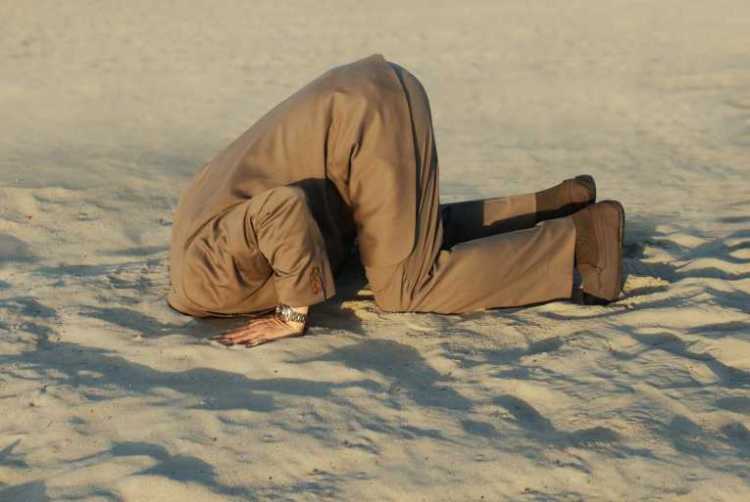
Incorrect! Scientists examine every bit of evidence that might contradict global warming. Do you think they want their world to warm up, climate systems to change, and the Antarctic ice sheet to melt, among other consequences?
No. Scientists would rejoice the day global warming was definitively proven, in the words of one denier teacher of mine, “untrue.”
However…the evidence just keeps compounding.
I’m not saying that denial surrounding global warming is a form of religion. I’m saying that science and belief are two completely separate things.
Sometimes people ask me if I believe in aliens, in global warming, in conspiracy theories, in the NASA moon launches, in anything…
I always tell these people the same thing. I believe in none of those things. I pay attention to the evidence concerning all of them. If there comes a day when someone actually proves that NASA employees are all liars, well…I will happily accept that truth.
But I don’t believe that will ever happen. 😉
If someone proves that aliens exist, then I’ll accept that aliens exist. Until then, I don’t believe that they exist or that they don’t exist. I simply don’t know.

Although…I really doubt Barack Obama does, either.
As for conspiracy theories…I don’t trust or subscribe to them, as I have no natural impulse to believe that I’m constantly being told lies. However, I don’t believe they’re inherently bad — they’re simply speculation.
If ever a conspiracy theory were proven true, it wouldn’t be a conspiracy theory anymore, would it? It would be fact, and I would take it as such. It’s the difference between believing…and examining the evidence.










Leave a reply to Ggreybeard Cancel reply