electromagnetic spectrum
-
Cosmology Demystified
That has got to be the single strangest post title I’ve ever written. Of all the whacky branches of science out there, cosmology almost takes the cake — second only, I think, to the downright trippy world of quantum mechanics.…
-

Cosmological Redshift Demystified
If you’ve been following my recent posts, cosmological redshift will likely be a familiar idea. I introduced it in my post on the Hubble Law. We revisited it again in our discussion of the size and brightness of galaxies. When…
-
What is the Hubble Law?
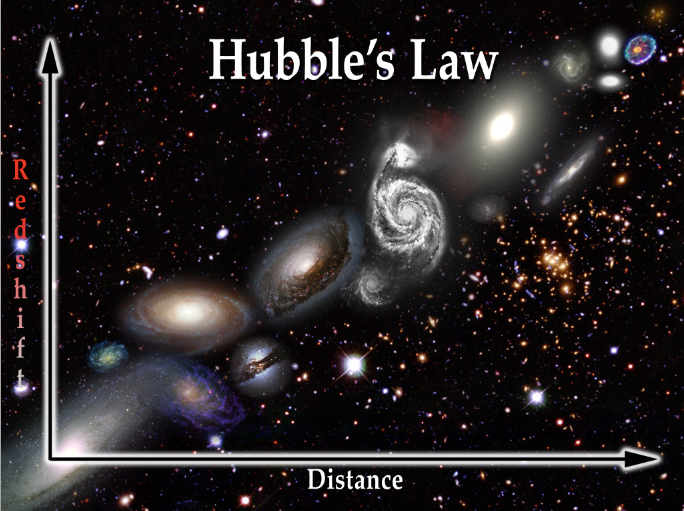
Last week, I teased you with the idea that it’s actually easy to estimate distances to galaxies. I do mean estimate — and distance indicators are still important. The Hubble Law is named for Edwin Hubble, the astronomer who was…
-
The Composition of the Milky Way
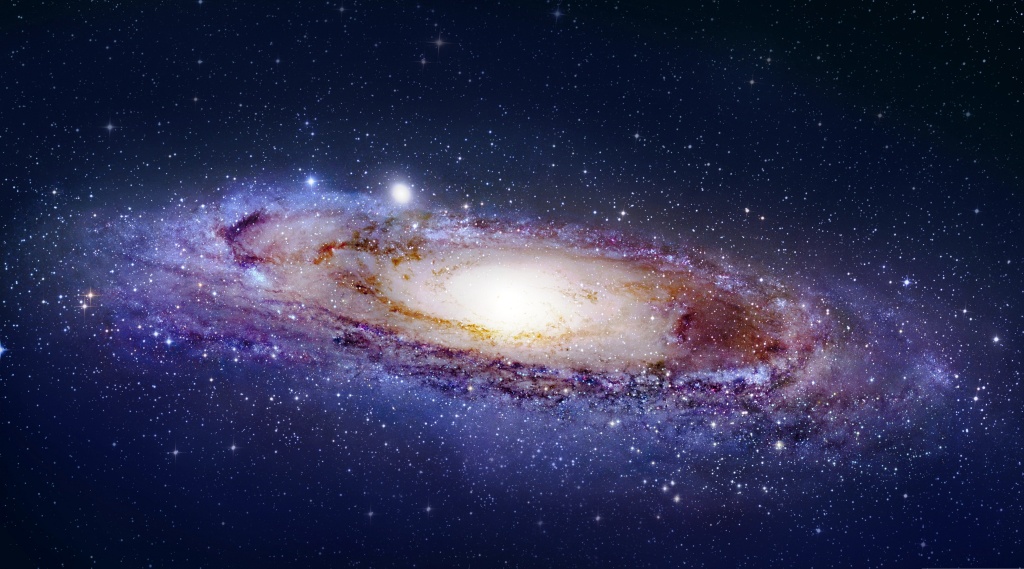
What is our home galaxy made up of? In the broadest sense, it’s made up of stars, clouds of dust and gas, and the mysterious dark matter. We could also get a little more detailed. We could say that it…
-

How Massive is the Milky Way?
Over centuries of philosophy and research, through the times of the classical astronomers to Galileo’s observations of the Milky Way, humanity’s understanding of our universe has evolved from a simple model of the sun and planets to a vast wheel…
-

Black Holes: What the Movies Get Wrong
Any of you recognize this? To those who don’t, it probably looks like a pretty unimpressive, blurry ring. In fact, this is the first ever image of a black hole, taken with an interferometer the size of the Earth. If…
-
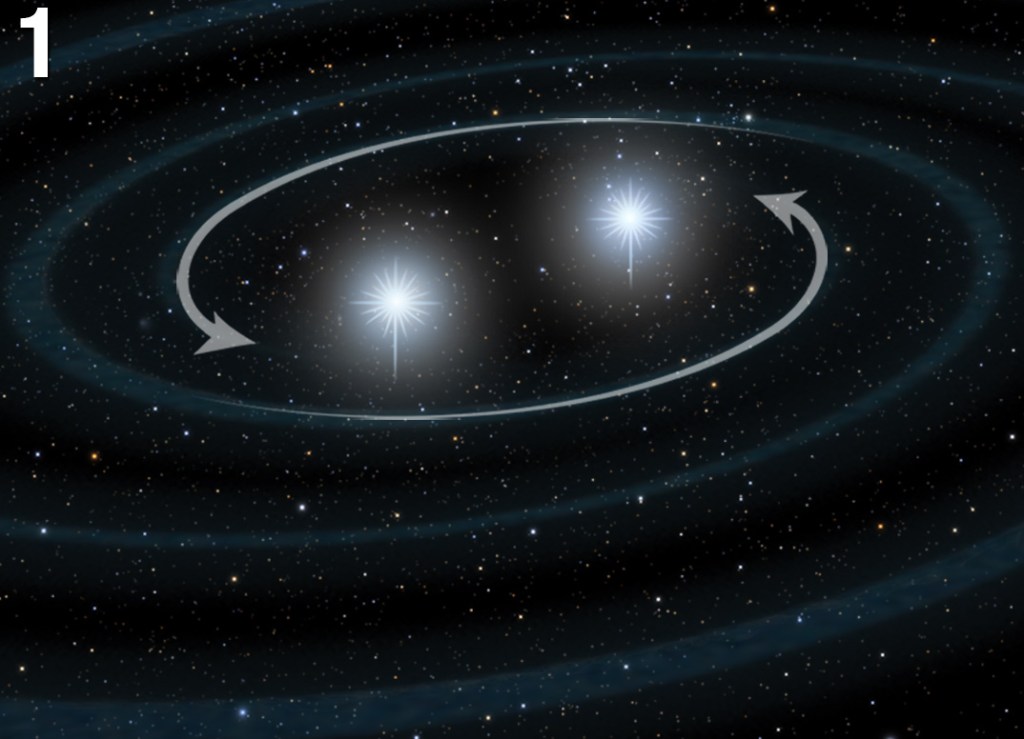
Binary Neutron Stars
Way back when we spent a number of posts surveying the stars, we covered binary systems. These are star systems that contain multiple stars. Imagine if our sun had a companion, and two stars rose and set in our sky…
-
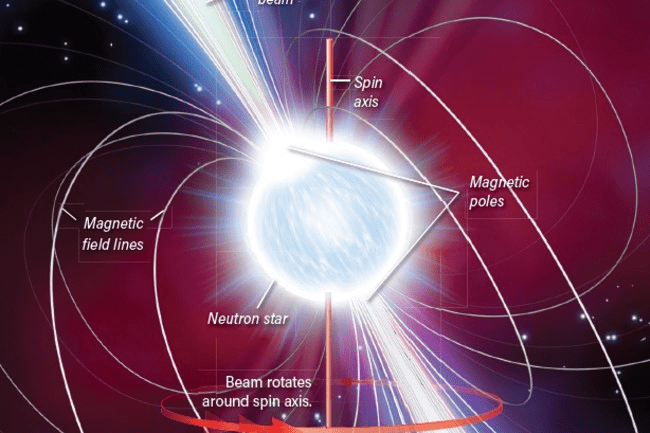
Pulsars as Neutron Stars
For those of you who missed my last couple of posts, allow me to introduce the neutron star: a stellar remnant similar to a white dwarf, but much denser, so dense that its protons and electrons have combined to form…
-

What is a Pulsar?
Imagine you’re observing the sky with a radio telescope. Observing the faintest, lowest-energy photons the universe has to offer is your specialty. You study interstellar dust clouds, protostars, and lots more. One day, though, something interesting pops up in your…
-

How Were Atoms Discovered?
Welcome to my fourth “Science Answers” post! If you have a question, you can ask it in the comments here, or ask it in an email. Or find me on Facebook! Q: (1) How did scientists find elements in the first place?…
