electromagnetic spectrum
-
The Story of a Newborn Star
What happens when a star is born? A couple of posts ago, I explained how a protostar forms out of a dense cloud core within the interstellar medium. But…wait. What exactly is a protostar again? A protostar forms when one…
-

From Cold Cloud to Hot Protostar
Paradoxically, stars begin in the galaxy’s coolest places: the dense giant molecular clouds (or GMCs). This is not quite the paradox it seems, as in the beginning, stars require little else but gravity to form. And that’s really quite lucky, because…
-

Radiation from Interstellar Dust
Does this sight look familiar? If you’ve had the opportunity to observe the night sky from a dark place, far away from the light pollution of the city, on a clear night, you might have seen this before. It’s the…
-

Extinction and Reddening of Starlight
Take a wild guess: What do you think this image is showing you? If you said it looks like a giant black hole in space, I don’t blame you. I also don’t blame you if you thought it looks like…
-
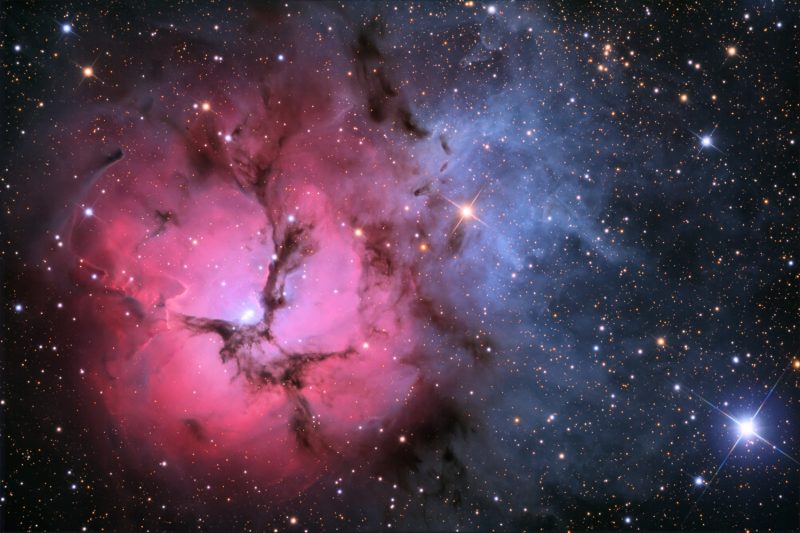
What is a Nebula Made of?
What you see here is the Trifid Nebula, a vast cloud of gas and dust in space. In my last post, we explored why it looks the way it does. We discovered that the pink hues of emission nebulae are caused…
-
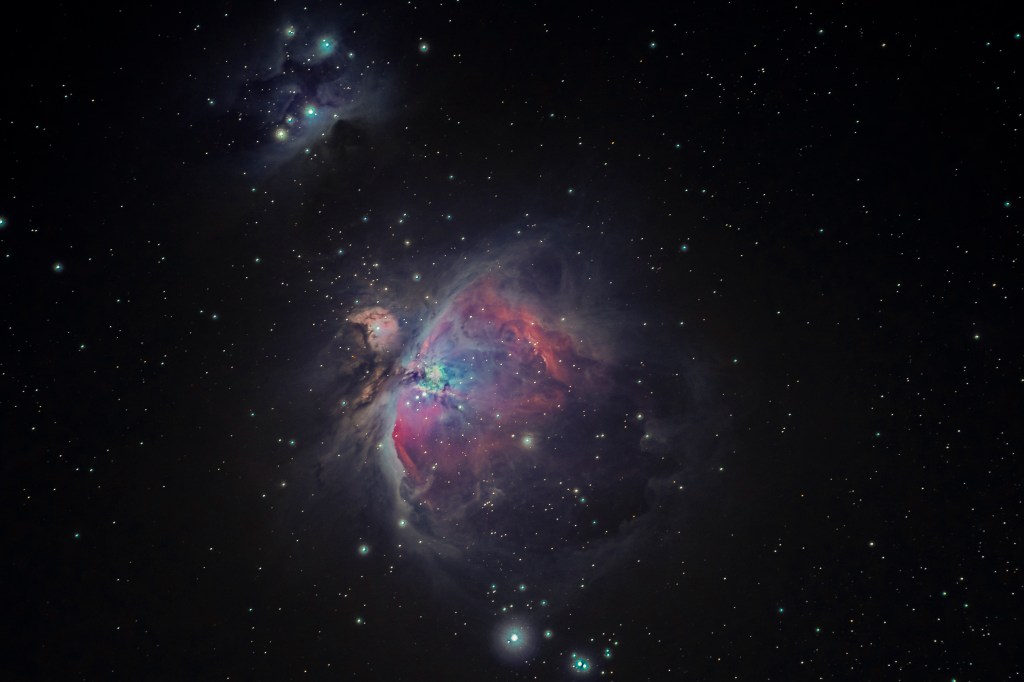
What is a Nebula?
What’s a nebula? Well…you’re looking at one. Okay, okay, I know. You want to know what that actually is. You want to know why it’s there. You want to know why there are colors in space…and why you’ve never noticed…
-
Spectroscopic Binary Stars
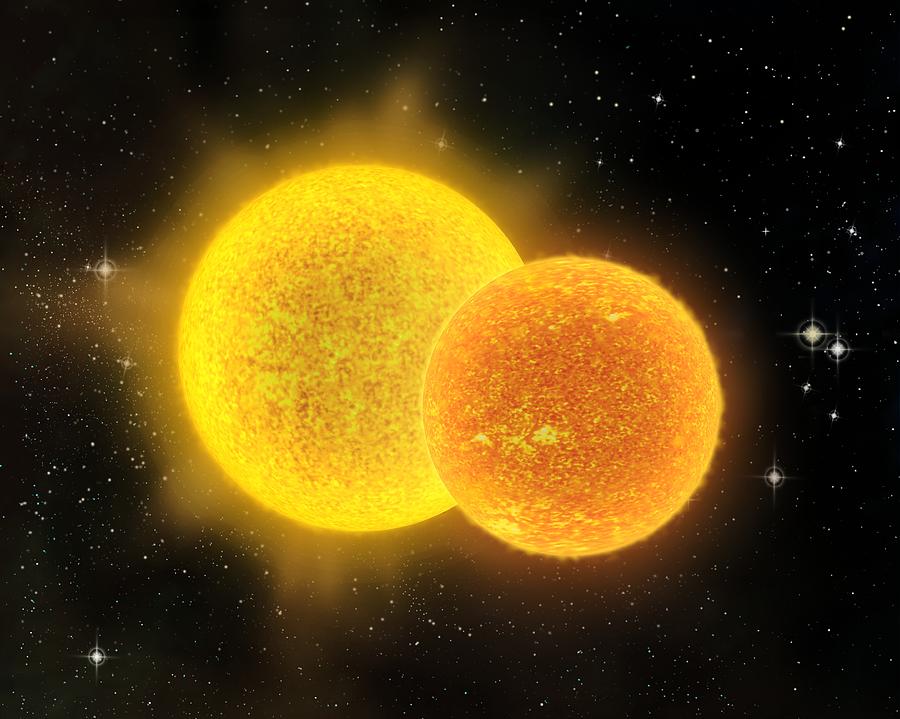
Consider a solar system far different from our own. A solar system governed by two suns, and consisting of planets we can only dream of. Would it surprise you to hear that, based on recent discoveries, that might actually be…
-
Star Types Demystified
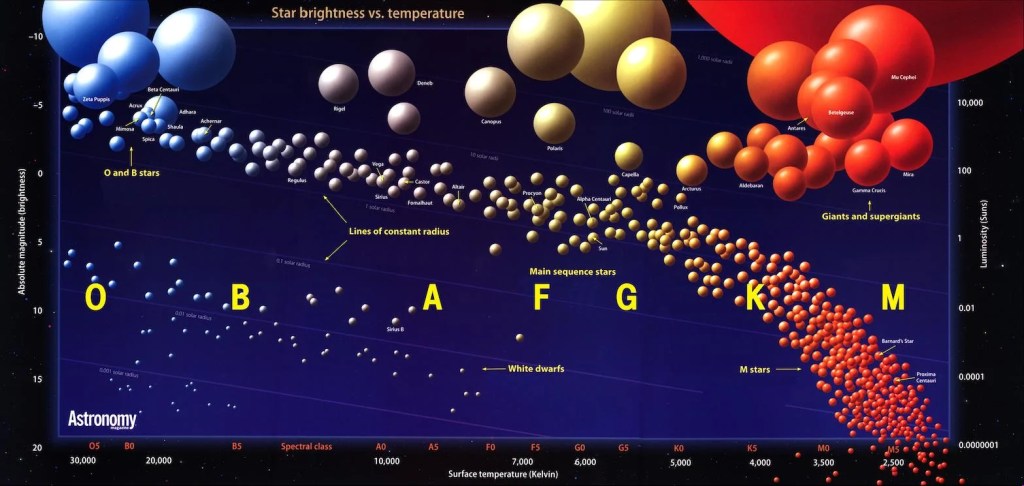
By now, I’ve introduced you to a lot of different ways to classify stars. Months ago, I talked about the different spectral classes — O, B, A, F, G, K, and M. Even before that, I told you about apparent visual…
-

What Makes a Star Blue?
Albireo is the distinctive double star in the head of the constellation Cygnus. You can find it yourself if you look for the Summer Triangle amid the dusty trail of the Milky Way across the night sky. The brighter, orange…
-

The H-R Diagram
There are 250 billion stars in our galaxy alone. Many are much like the sun, labeled with the Latin sol for “sun” in this diagram. But many more are not quite what we might expect stars to be like, after living…
