mass
-

What About Pluto?
In my last post, we explored the two types of planets: terrestrial (Mercury, Venus, Earth, and Mars) and Jovian (Jupiter, Saturn, Uranus, and Neptune). Pluto was conspicuously absent from the lineup…especially considering that we took a peek at the moon.…
-

How Massive are Galaxies?
If you needed to measure the mass of, say, a brick — or some other Earthly object — you could just set it on a scale. (Yes, scales measure mass, not weight.) With galaxies, it’s not so easy! I don’t…
-

The Milky Way Demystified
Alright, people…time to finish off our exploration of the Milky Way Galaxy, our home in the cosmos! For the past nine weeks, we’ve covered everything from how our galaxy was “discovered” to how it may have formed. But there’s so…
-

How Massive is the Milky Way?
Over centuries of philosophy and research, through the times of the classical astronomers to Galileo’s observations of the Milky Way, humanity’s understanding of our universe has evolved from a simple model of the sun and planets to a vast wheel…
-

How to Find a Black Hole
Okay, good question. How the heck do you find an object that emits no radiation? Astronomers find — and study — just about everything in the universe using the radiation it emits or reflects. So…what happens when the object we’re…
-

What are Molecular Clouds?
Meet the Pillars of Creation, a photograph taken by the Hubble Telescope in 1995. These apparent “pillars” of dust and gas are what we call molecular clouds. And this region of clouds in space is aptly named: it’s where stars are…
-
Star Mass and Density
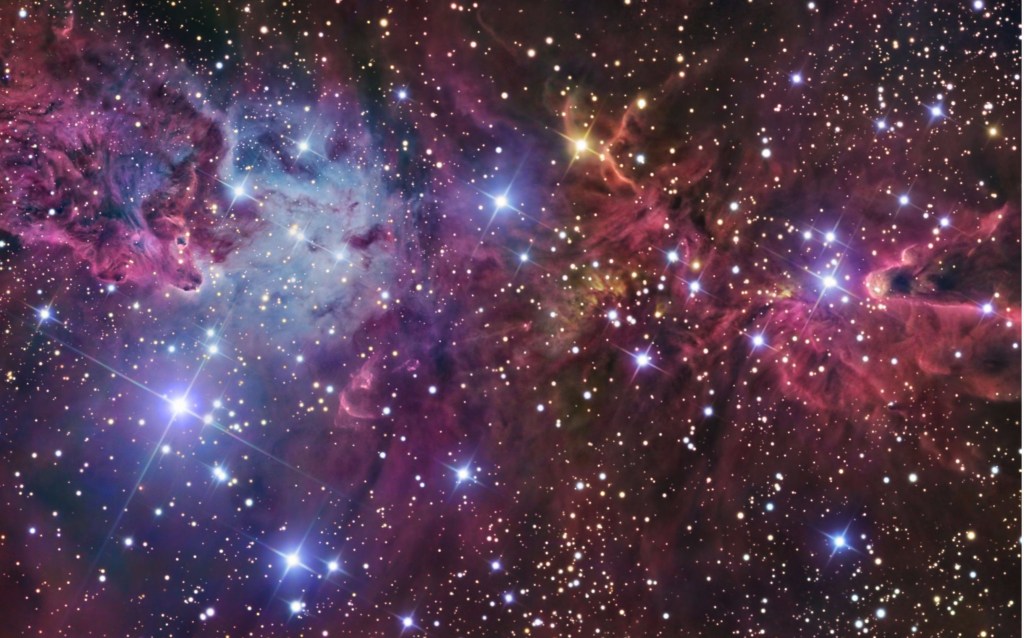
What makes a star shine bright? Much earlier on — probably months ago now — I explained how something called the proton-proton chain generates massive amounts of energy within stars, and enables them to fuel whole solar systems. That’s the battery…
-
Binary Stars
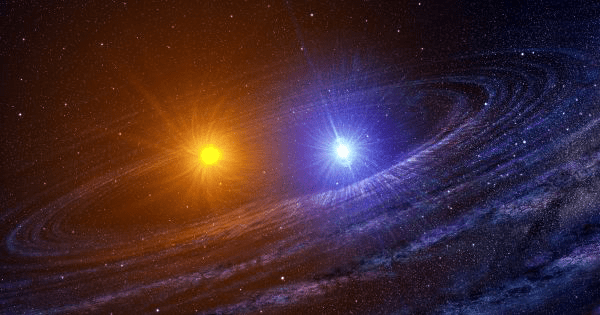
We know how big stars are; they range from the size of the Earth to over a thousand times the size of the sun (which is in itself over one hundred times the size of the Earth). We know they’re…
-
The Building Blocks of the Universe
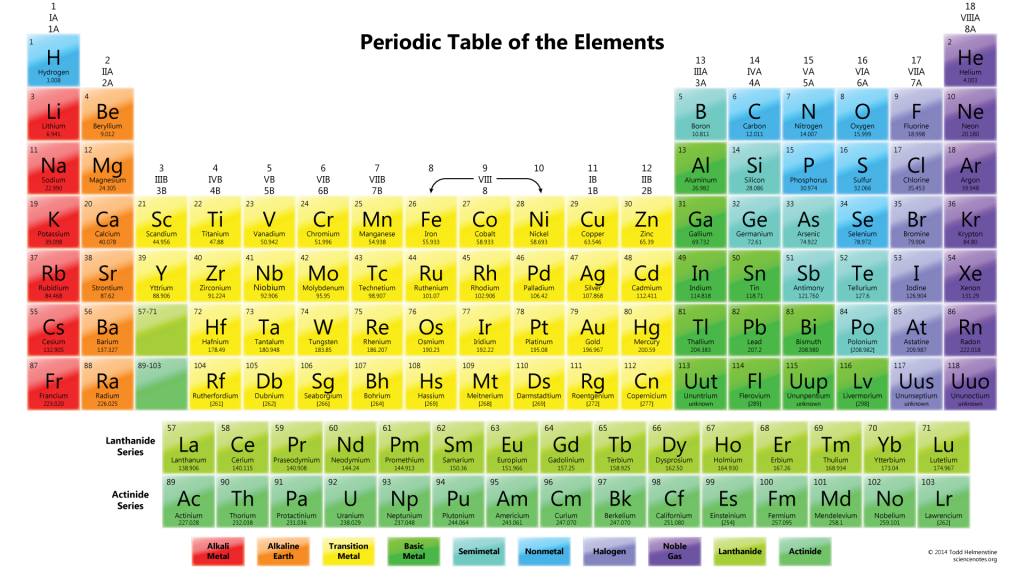
“The Building Blocks of the Universe.” When you put it that way, atoms sound less like a topic specifically for a chemistry class and more like something astronomers might discuss. They really are. I’ve got a fantastic reason to include…
-

Einstein: General Relativity
Albert Einstein may have been the genius among physicists, but like all others before his time, he stood on the shoulders of giants. Einstein did not propose that the sun was the center of the solar system; that idea was…
