wavelength
-

Cosmological Redshift Demystified
If you’ve been following my recent posts, cosmological redshift will likely be a familiar idea. I introduced it in my post on the Hubble Law. We revisited it again in our discussion of the size and brightness of galaxies. When…
-
What is the Hubble Law?
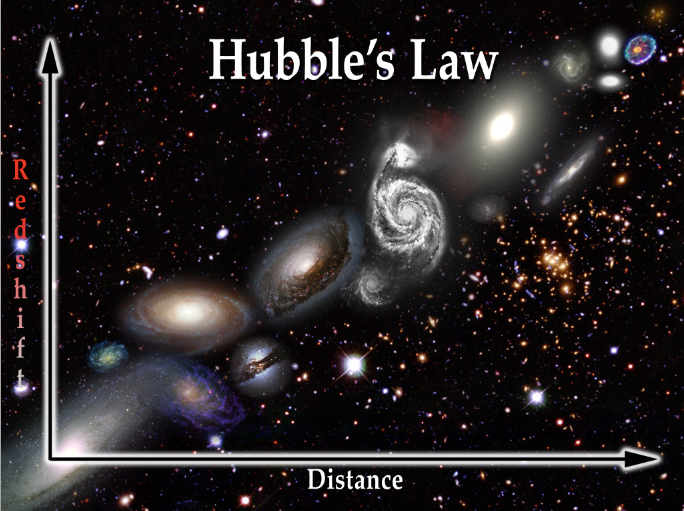
Last week, I teased you with the idea that it’s actually easy to estimate distances to galaxies. I do mean estimate — and distance indicators are still important. The Hubble Law is named for Edwin Hubble, the astronomer who was…
-

How Were Atoms Discovered?
Welcome to my fourth “Science Answers” post! If you have a question, you can ask it in the comments here, or ask it in an email. Or find me on Facebook! Q: (1) How did scientists find elements in the first place?…
-

Extinction and Reddening of Starlight
Take a wild guess: What do you think this image is showing you? If you said it looks like a giant black hole in space, I don’t blame you. I also don’t blame you if you thought it looks like…
-

What Makes a Star Blue?
Albireo is the distinctive double star in the head of the constellation Cygnus. You can find it yourself if you look for the Summer Triangle amid the dusty trail of the Milky Way across the night sky. The brighter, orange…
-
Spots on the Sun
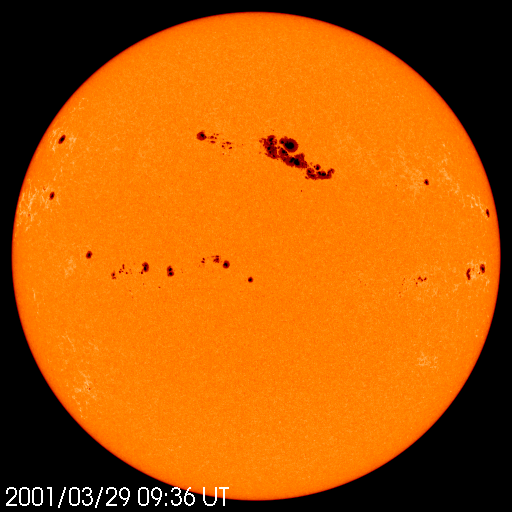
Have you ever looked at the sun, and seen something like this? Now, before you decide to look at it right now and see what you see, it’s my responsibility as an amateur astronomer to remind you of the safety…
-

Energy Flow from the Sun’s Core
Ask any climate scientist how we should power our world without fossil fuels, and they’re bound to tell you about wind and solar power. You might be surprised to know that both of these come from the sun. Solar panels…
-

Our Sun: Helioseismology
We can’t see below the surface of the sun. That makes sense, really. We can’t see below the surface of the Earth, either — we have to get creative if we want to find out what goes on below the…
-
The Doppler Effect
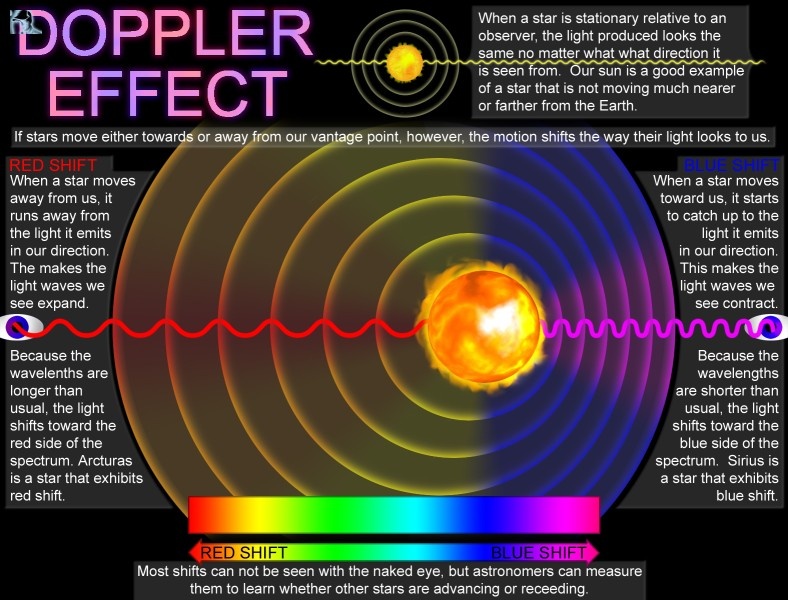
Have you ever heard the ice cream truck? When I was little, I remember hearing the ice cream truck all the time. Just the sound of the opening notes of “Pop Goes the Weasel” were enough to propel me to…
-
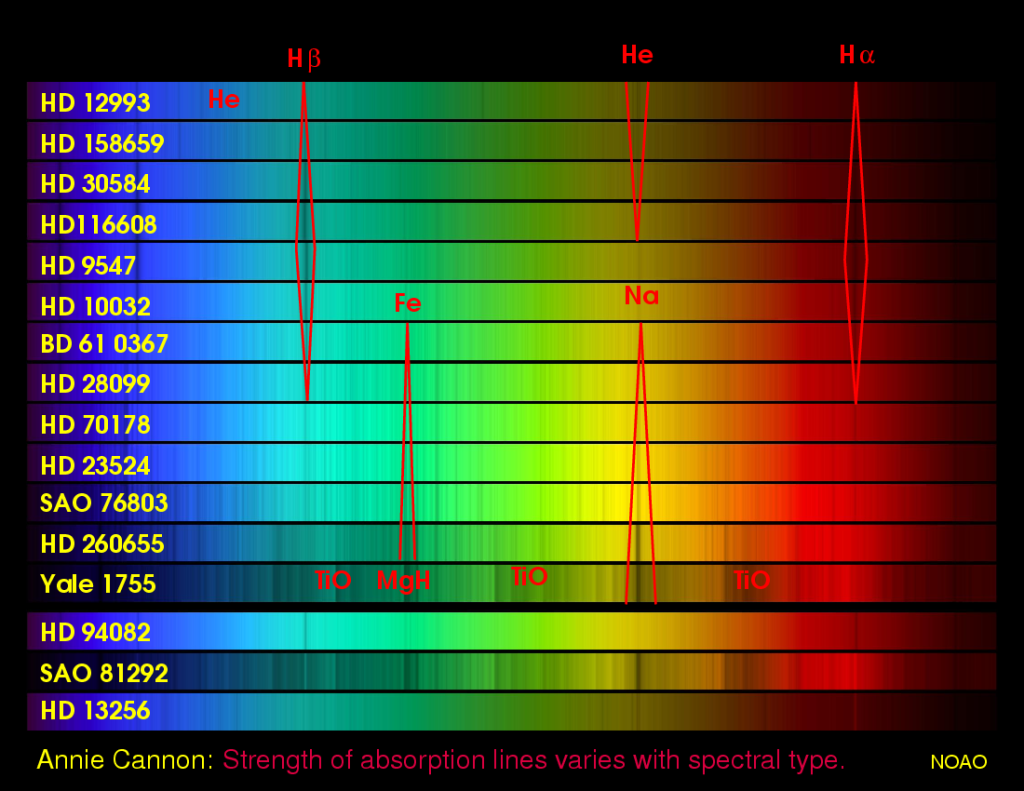
The Atomic Spectrum
Astronomers know that if white light passes through a prism and is bent, it’s separated out into its component colors — the colors of the rainbow. Astronomers also know that when light interacts with atoms, the building blocks of the…
