

Have you ever read about a scientific discovery, and wondered, “How the heck can we possibly know?”
Without a background understanding of the scientific method, that’s a difficult question to answer — because we first need to define what we mean by “know.” But I’ll get to that later.
Most people I encounter don’t have very much exposure to the general scientific process, and have not had many opportunities to fully understand it. And that’s okay! It is never too late to learn.
If you wonder how we can actually claim to know anything about the universe, you’re not alone. And this post is for you.
- Step 1: Ask a Question
- Step 2: Do Background Research
- Step 3: Construct a Hypothesis
- Step 4: Test Your Hypothesis
- Step 5: Analyze Data and Draw a Conclusion
- Step 6: Communicate Results
- Why is it so important to test only one variable?
- How do scientists know how the world works?
Step 1: Ask a Question

The scientific method begins with curiosity.
That’s it. That’s all you need to start out. Just curiosity, the desire to know more about the world around you.
Let’s start out with a simple example: “What are the feeding habits of birds?”
Step 2: Do Background Research

This is the scientific method’s way of saying, “don’t reinvent the wheel.”
It’s not saying that you shouldn’t retest things that have already been tested. In fact, scientists do this all the time. It’s saying you need a strategy, and you should learn from previous experiments — “stand on the shoulders of giants,” so to speak.
Going back to our bird feeding example…the first thing you’ll want to research is which bird species are commonly found in the area you’re studying.
Let’s say you want to study how birds interact with bird feeders…
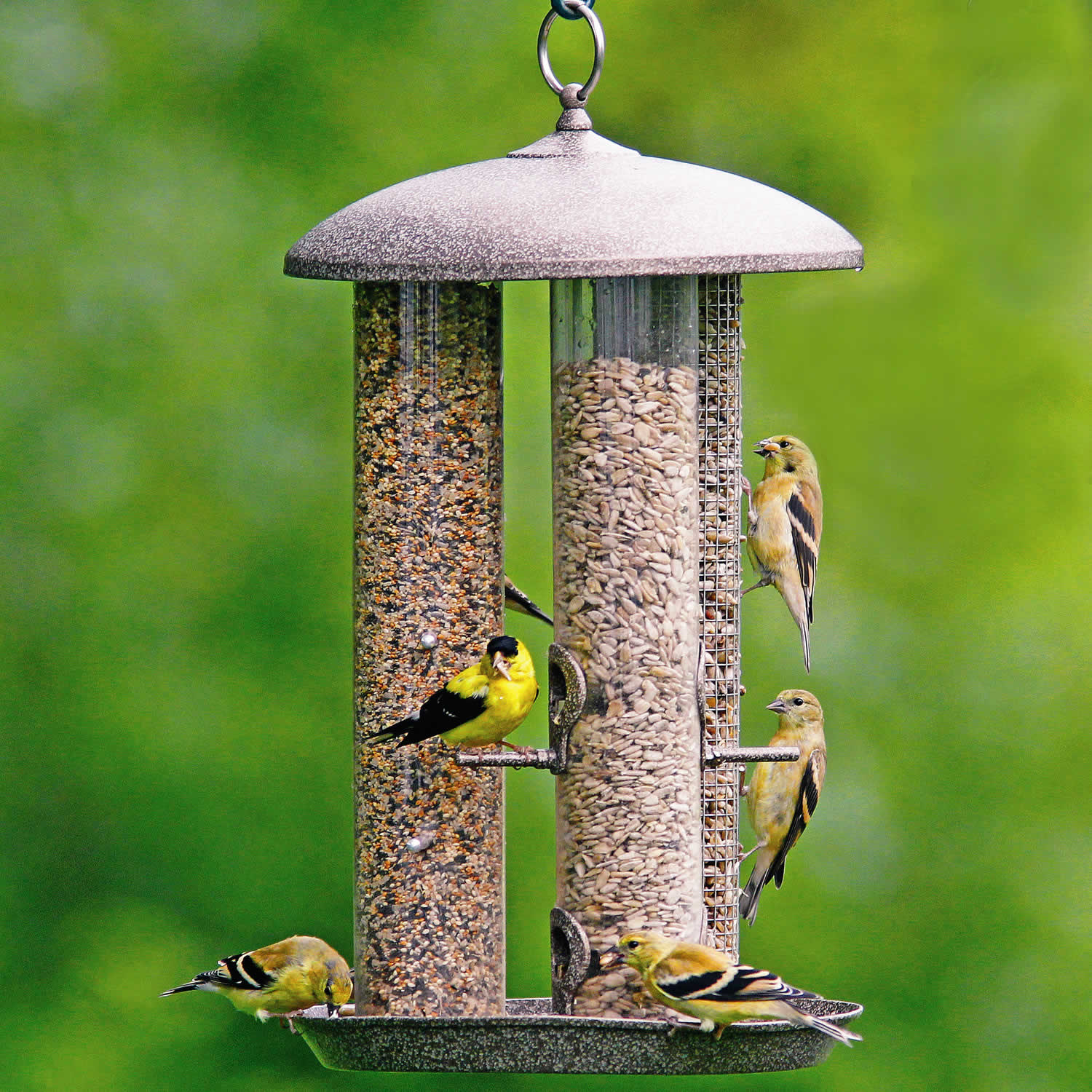
You’ll want to learn what your area’s species’ natural diet is — otherwise, you’ll struggle to attract any birds!
You’ll also want to explore any previous research on feeding behavior, feeder placement (such as height and visibility to birds), and feeder design. You won’t get much hummingbird traffic at a tube feeder!
And, of course, you’ll want to research the optimal climate for your experiment, and the times of day that the birds are most active.
Finally, and perhaps most importantly, you’ll need to decide the best way to collect your data! Will you observe the birds (directly or with cameras), or will you perhaps measure the weight of the uneaten birdseed at specific intervals?
Step 3: Construct a Hypothesis
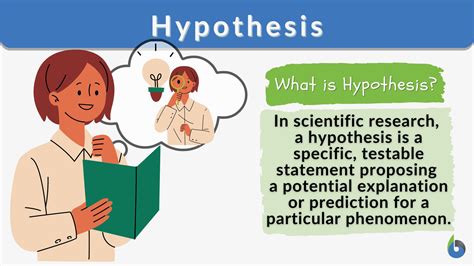
This is a fancy way of saying, make an educated guess about the answer to your question.
The key word here is educated — and your “education” is your background research. Now that you know a little background info about bird behavior, what do you think will be a reasonable answer to your original question?
A good hypothesis is testable — that is, experiments will be able to confirm it or disprove it — and it has an independent variable and a dependent variable.

Let’s go back to our bird example. The question we’re trying to answer is, “What are the feeding habits of birds?”
Our dependent variable depends on a variable that we change — that’s why it’s called the dependent variable. The variable we change is the independent variable.
In this case, our independent variable should be one factor that influences bird behavior: for example, the type of the bird feeder. Nothing else will change. We will hold all other possible factors constant, such as the type of food, the time of year, and the height of the feeder.
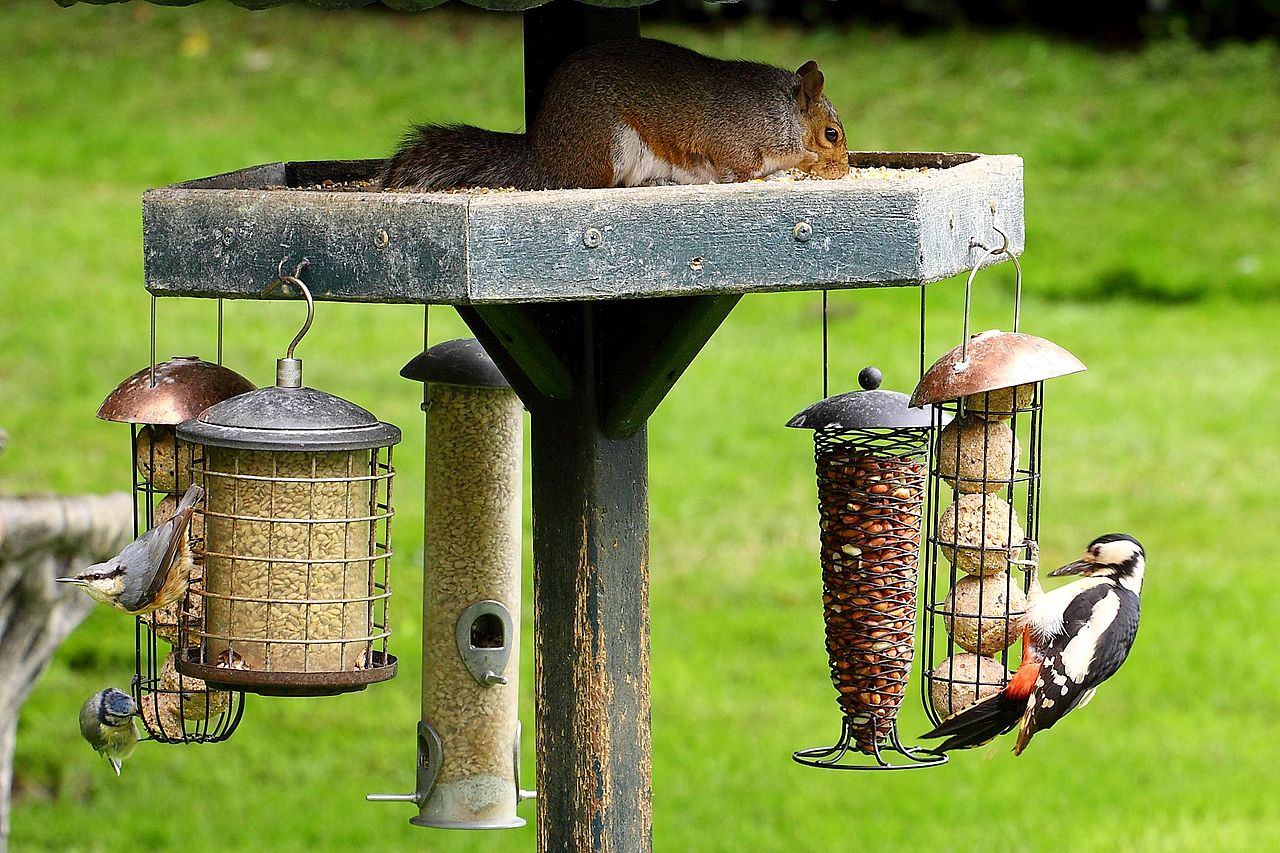
Because our hypothesis needs to be measurable, we need to decide on specific types of bird feeders. Our background research will help us decide which types of bird feeders the birds will be the most attracted to.
We will experiment to see how many birds visit a bird feeder daily, depending on the type of bird feeder. Since the number of birds depends on the type of feeder, the number of birds is the dependent variable.
We’ll label each type of bird feeder as Feeder 1, Feeder 2, and Feeder 3.
Here’s an example hypothesis we can use: “Birds prefer Feeder 1 the most and Feeder 3 the least.”
This is a prediction. Now we need to do experiments to see if we predicted correctly.
It is very important that we only change the type of feeder, and not any other factor that could influence bird behavior — and you’ll see why shortly!
Step 4: Test Your Hypothesis

Now we set up (hang, attach, etc.) the bird feeders we’re using, and we wait for the birds to come.
If we’ve done adequate background research and are testing our hypothesis under conditions that birds like (that is, there are birds around, they like at least one of the feeders we’re using, etc.), then birds will come. Now it’s just a matter of collecting the data.
That data could come in a number of forms. We could:
- record on video the number of birds that visit each feeder
- directly observe the number of birds that visit each feeder (this would probably be more difficult to actually carry out)
- measure how much feed disappears from the feeders over specific intervals
Now, this bit’s super important…
Our question and hypothesis have been qualitative. That is, they don’t involve accurate measurements. You could answer our question, “What are the feeding habits of birds?” with “They eat a lot from Feeder 1, and less from Feeder 2, and even less from Feeder 3.”
But one of the most important parts of the scientific process is that other scientists must be able to repeat your experiment and confirm your results. What will “a lot” and “less” mean to them?
Our data needs to be quantitative.
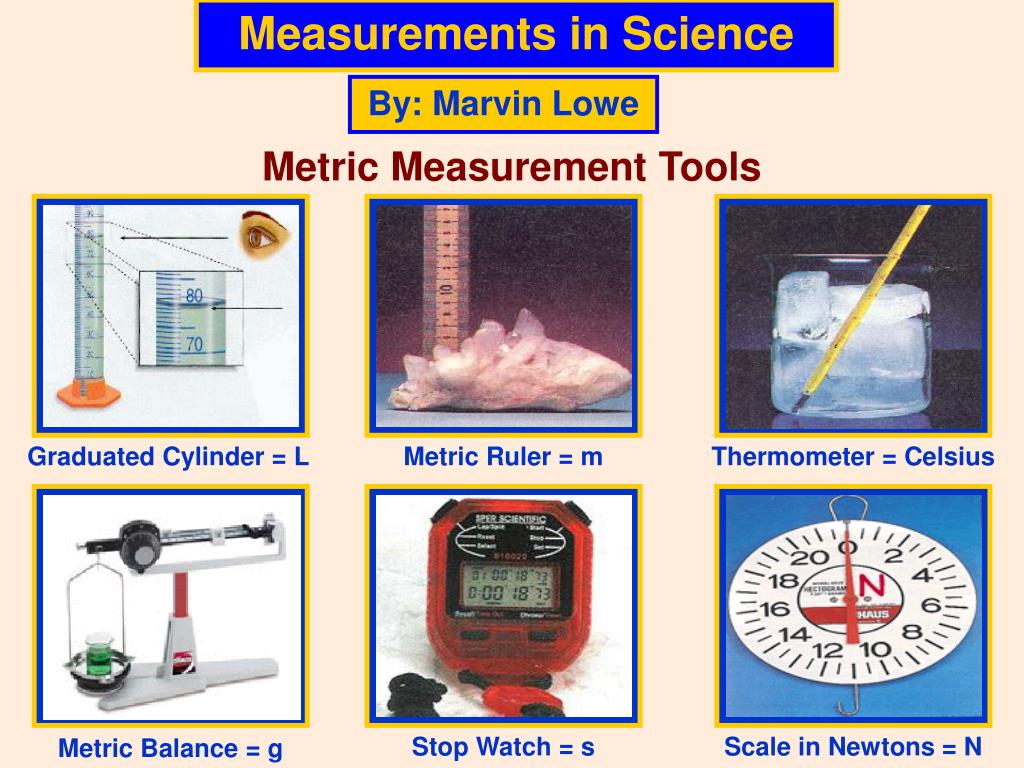
If we’re observing how many birds visited each feeder, we need to provide a number. If we’re measuring how much food was consumed, we should provide the weight of the food.
If we’re measuring a weight, we need to define our units: for example, we could say we’re weighing the food left over, and measuring in kilograms.
In general, volume might also be a measurement we can use. But for our experiment, we’re testing different types of feeders (likely different shapes and sizes), and the volume might be difficult to measure accurately.
We also need to note down the time interval for the experiment. Are we observing feeding habits over a day, a week, a month, etc? Let’s say our experiment takes place over a week.
We should record our data meticulously in tables or graphs. Our goal is to record accurate numbers. We don’t need to draw any conclusions yet, though. That’s the next step!
Step 5: Analyze Data and Draw a Conclusion

At the end of our experiment, we should have a bunch of data recorded on how many birds fed from each feeder, or how much food was consumed from each feeder.
Now it’s time to put it all together and see if our hypothesis was right.
Let’s say we were recording on video to see the actual number of birds that fed from each feeder. We might observe from the video that each day on average, 50 birds fed from Feeder 2, 20 birds fed from Feeder 1, and 5 birds fed from Feeder 3.
Does it match our hypothesis?
Our hypothesis was: “Birds prefer Feeder 1 the most and Feeder 3 the least.”
Well, the birds certainly didn’t prefer Feeder 1 the most: 50 birds fed from Feeder 2, and only 20 birds from Feeder 1. But they did prefer Feeder 3 the least. Only 5 birds fed from Feeder 3.
We were partially right…and partially wrong. And we need to communicate that full result in our report.
Step 6: Communicate Results

The way you communicate your results will depend on your experiment. Was this a school project? In that case, you should put together a report and a presentation according to your teacher’s instructions.
If this was a professional project, on the other hand, you’ll submit your results for peer-review, and other scientists will examine your work and try to replicate it. If it stands up to scrutiny, it’ll go through the publishing process.
Why is it so important to test only one variable?
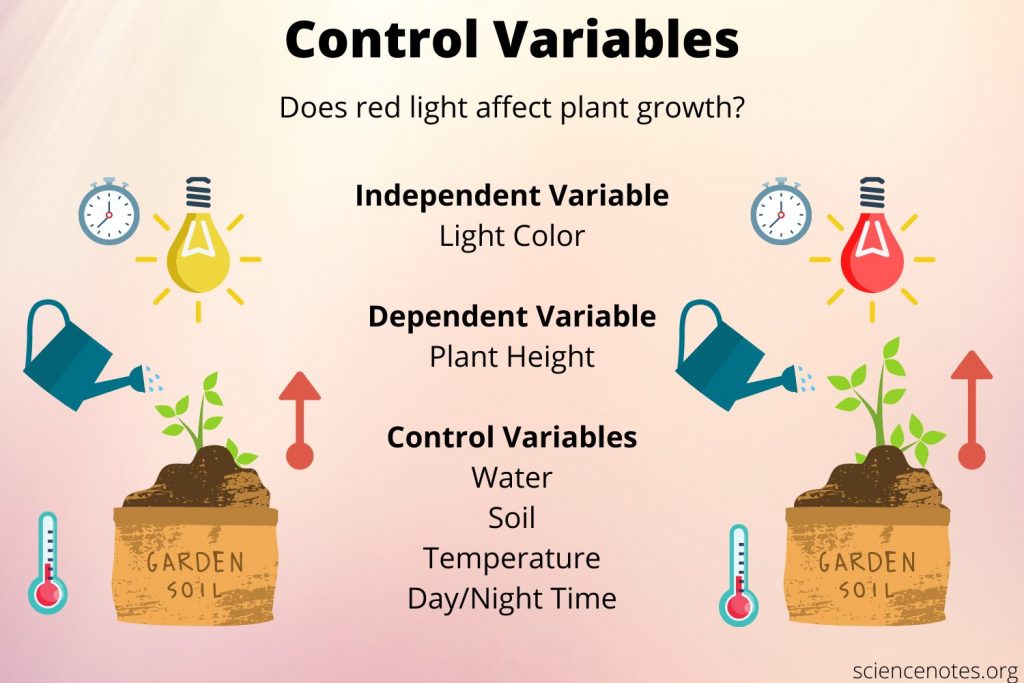
Imagine that we had let the experiment go on for months, through changing seasons.
If the bird traffic to our feeders had changed, would we know for sure what factor had influenced it? Our data wouldn’t be clear. We might not see a clear pattern in which feeder they preferred. (We could have done a different experiment entirely, or a set of experiments, testing each feeder one at a time and seeing which they prefer during which season.)
Similarly, imagine if we hung the feeders at different heights, as well as using different types. Our data would be confused even more.
The variables that we don’t change are called constants. The graphic above calls them “controls,” but that usually describes something different — and that’s a story for another time!
And now, for the million-dollar question…
How do scientists know how the world works?
Because the scientific method is rigorous. It guides us to perform experiments and make observations, and test our predictions against the reality we observe.
(Note that certain scientific fields, such as astronomy, don’t lend themselves to laboratory experimentation, and the scientific method needs some modification. I’ll address this in its own post!)1
This is a realm of study where “failure” is not only okay, but expected. There’s a famous quote attributed to Thomas Edison that you may have heard before:
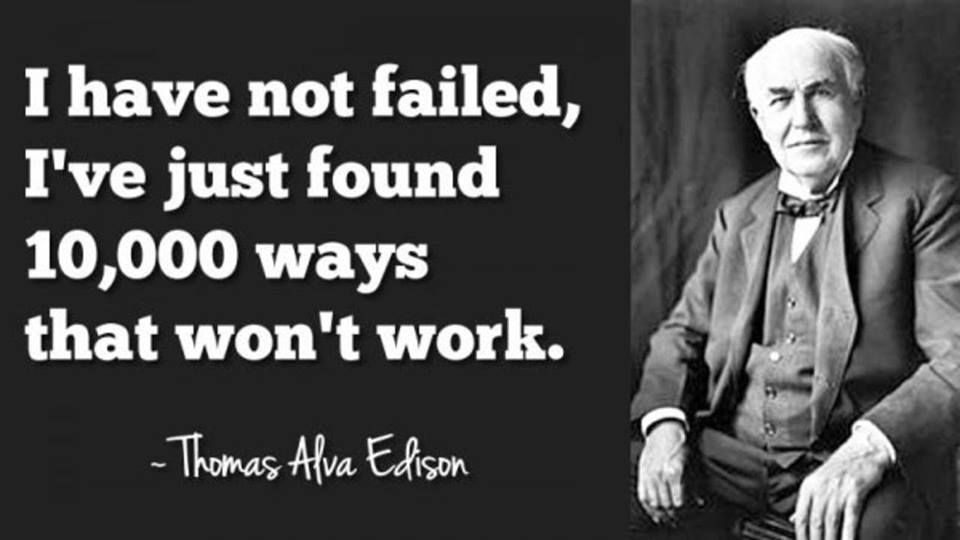
If you can’t see the image, the quote reads: “I have not failed, I’ve just found 10,000 ways that won’t work.”
If your experiment doesn’t confirm your hypothesis, you modify (or outright reject!) your hypothesis and start again. But you haven’t “failed,” not in the usual sense of the word. You’ve learned something. You’ve learned that the prediction you made wasn’t correct, and you’re that much closer to learning what is correct.
This is what science is. It’s an ongoing process of prediction, experimentation, and observation. Scientists never “believe” something or even truly “know” something. Instead, they can have extremely high confidence in a particular fact because the scientific method has failed to disprove it over and over again.
Predictions that scientists fail to disprove over and over again become scientific theories or laws. Our confidence that they are correct is so high that we assume they are true when performing other experiments.
That is how we “know.”
I hope I’ve managed to clarify the scientific method a bit! Next up, we’ll return to our exploration of cosmology with the discovery of dark energy.
- Added this clarification because this post doesn’t actually shed much light on how astronomers know — quite relevant, given this blog’s general focus. ↩︎









Leave a reply to Emma Cancel reply