
We started covering cosmology way back in April. And since then, we’ve explored quite a bit — in fact, the grandest story the universe has to offer.
We’ve followed the universe from the first fractions of a second after the Big Bang, to the formation of the first atomic nuclei, the first atoms, and the first stars.
We’ve peered into the depths of distant galaxies and wondered at the mechanics of supermassive black holes.
But one thing we haven’t done is lay out this entire story, from beginning to end.
So, we have a bit of a different format this time: rather than an explanatory article, a cosmological timeline!
Keep in mind, though, that cosmology is a rapidly evolving field on the final frontier of discovery. The specific “timestamps” below are bound to change as new research emerges. This timeline provides a broad overview to hopefully better orient you to the story of the universe.
Ground Zero
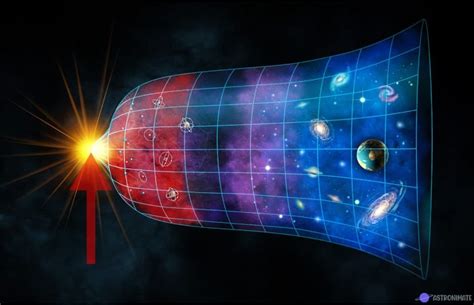
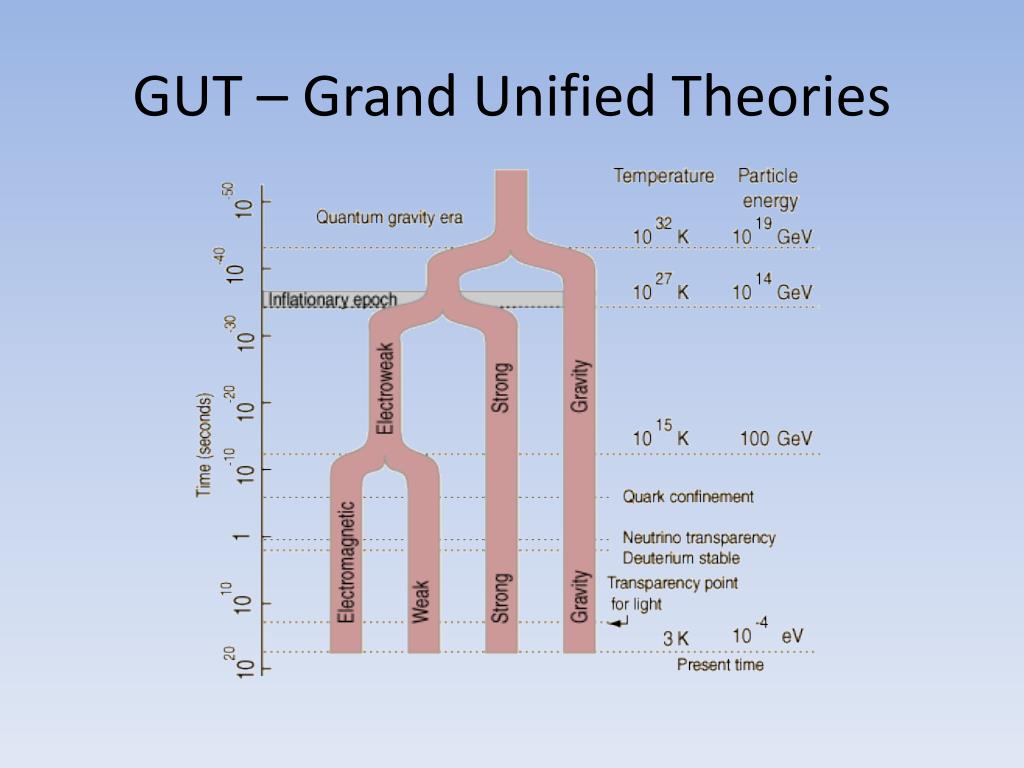
At the beginning of time — the instant of the Big Bang — the 4 fundamental forces of nature are unified as one “theory of everything” (TOE) force.
10-43 Seconds
Gravitation separates from the “electronuclear” force. The electronuclear force unifies the strong force, weak force, and electromagnetic force as one grand unified theory (GUT). The universe’s temperature is 1032 K.

10-36 Seconds
The “electroweak” force separates from the strong force, releasing a tremendous burst of energy that triggers inflation.
Inflation
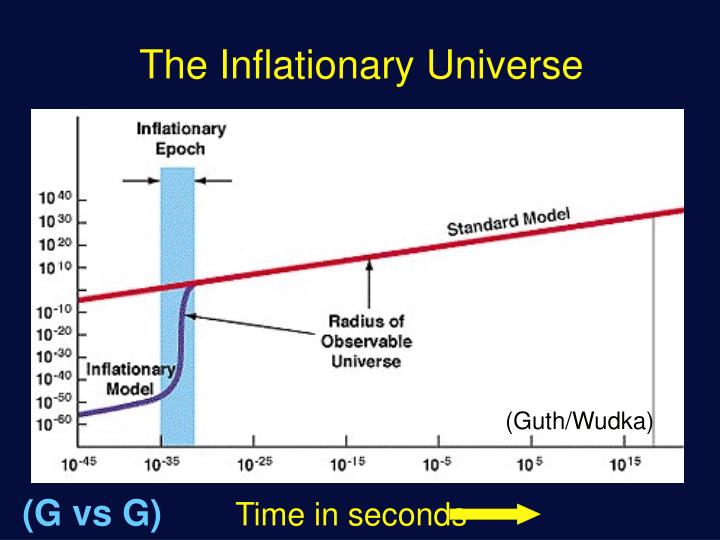
Over the course of only 10-32 seconds, the universe expands in scale by a factor of 1050. This moment would have forced the curvature of space-time toward zero — flattening the universe.
10-12 Seconds
The weak nuclear force separates from the electromagnetic force. The universe’s temperature is 1015 K. It continues to expand — at a substantially slower rate than during inflation.
10-6 Seconds
The universe is a soup of energy, flickering between matter-antimatter particle pairs and photons and back again. Its temperature is 20 million K. It continues to expand.
1 Minute
All the protons, neutrons, and electrons that will ever exist have been produced — but there are only subatomic particles, no atomic nuclei. The universe continues to expand.
2 Minutes
Nucleosynthesis begins. Protons and neutrons bond to form deuterium nuclei: a heavy isotope of hydrogen. The universe continues to expand.

3 Minutes
Deuterium nuclei are able to combine with other nuclei to form helium nuclei. The universe continues to expand.
4 Minutes
The universe continues to expand and cool, and nuclear reactions slow down.

30 Minutes
Nuclear reactions stop completely. The first era of nucleosynthesis comes to an end.
The universe is 75% hydrogen nuclei, 25% helium nuclei, and contains trace amounts of lithium-7.
The universe holds a temperature of 1 billion K…and continues to expand.
Radiation Dominates
The density of radiation is greater than that of matter, and constant interaction between free-floating electrons and photons means their cooling is linked. Radiation keeps matter spread out and prevents it from clumping under the force of gravity. Expansion of space continues.
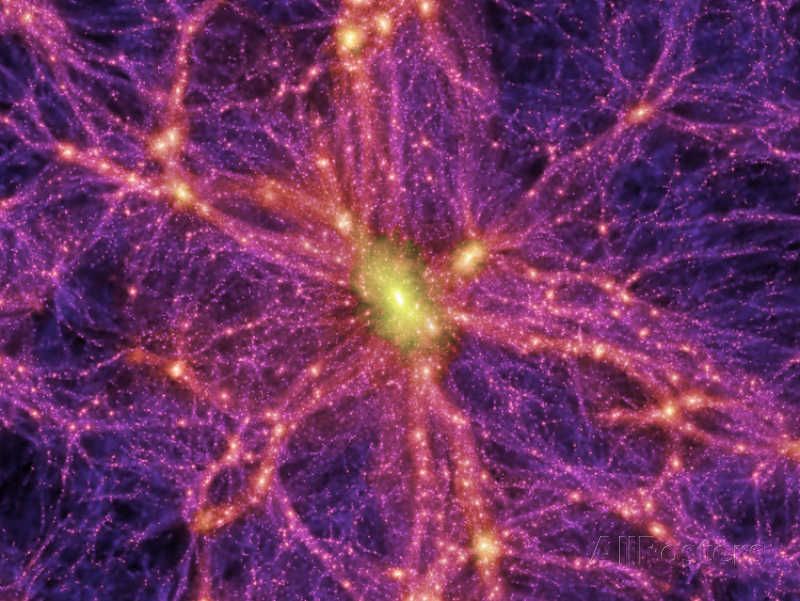
Dark Matter Clumps
Unable to interact with radiation or with ordinary (baryonic) matter, dark matter begins to clump together under its own gravity. It draws together into long strands, like a great cosmic spiderweb. Expansion of space continues.
50,000 Years
As the universe continues to expand, radiation thins out, finally allowing baryonic matter to clump together…and, slowly, the baryonic matter is drawn into the dark matter web like insect prey. It begins to form the clouds of gas that will eventually form galaxies.

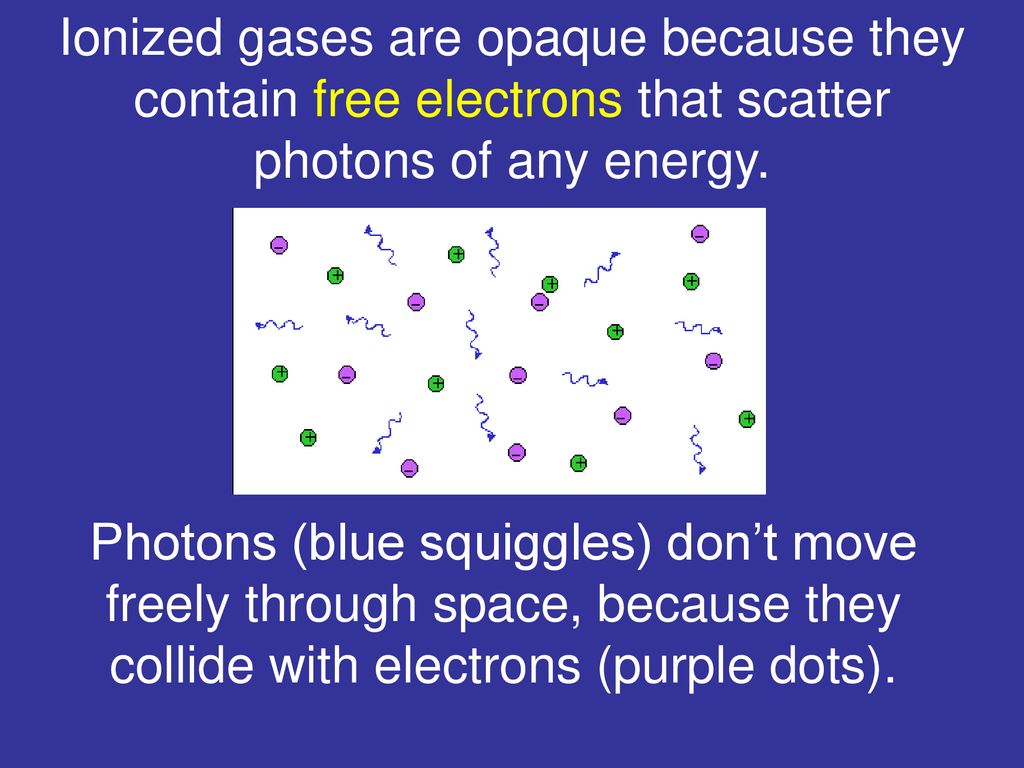
The universe is opaque
These gases are still ionized, which means they contain free electrons. Photons scatter off the free electrons and can’t move freely through space, so the universe is opaque. Expansion continues.
85,000 Years
The universe’s expansion carries the gas apart…until the free electrons are too far apart to interact with the photons.
The universe begins to become transparent.

Recombination
The temperature cools to 3000 K, allowing protons to capture and hold free electrons…forming the first atoms, neutral hydrogen.
The gas is no longer ionized, and the universe becomes completely transparent.
As always, expansion continues.
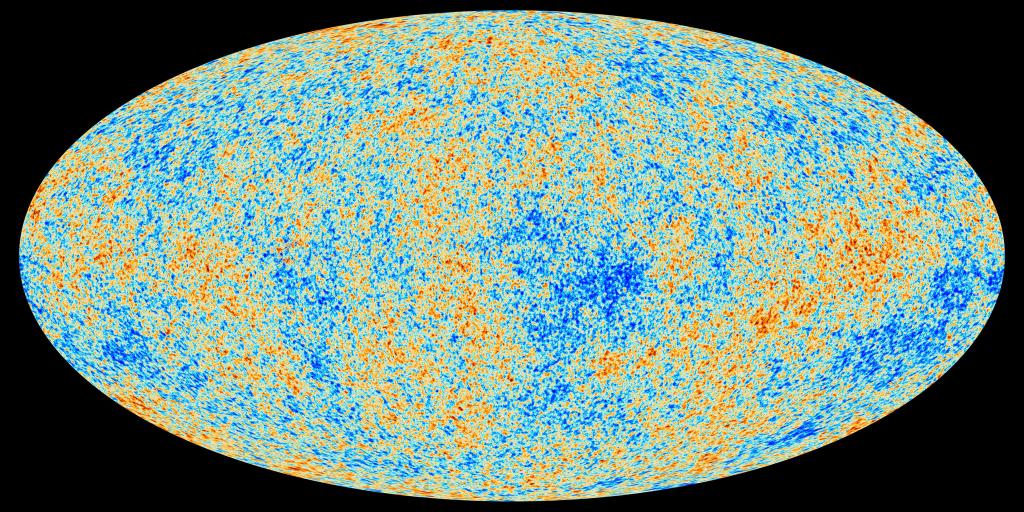
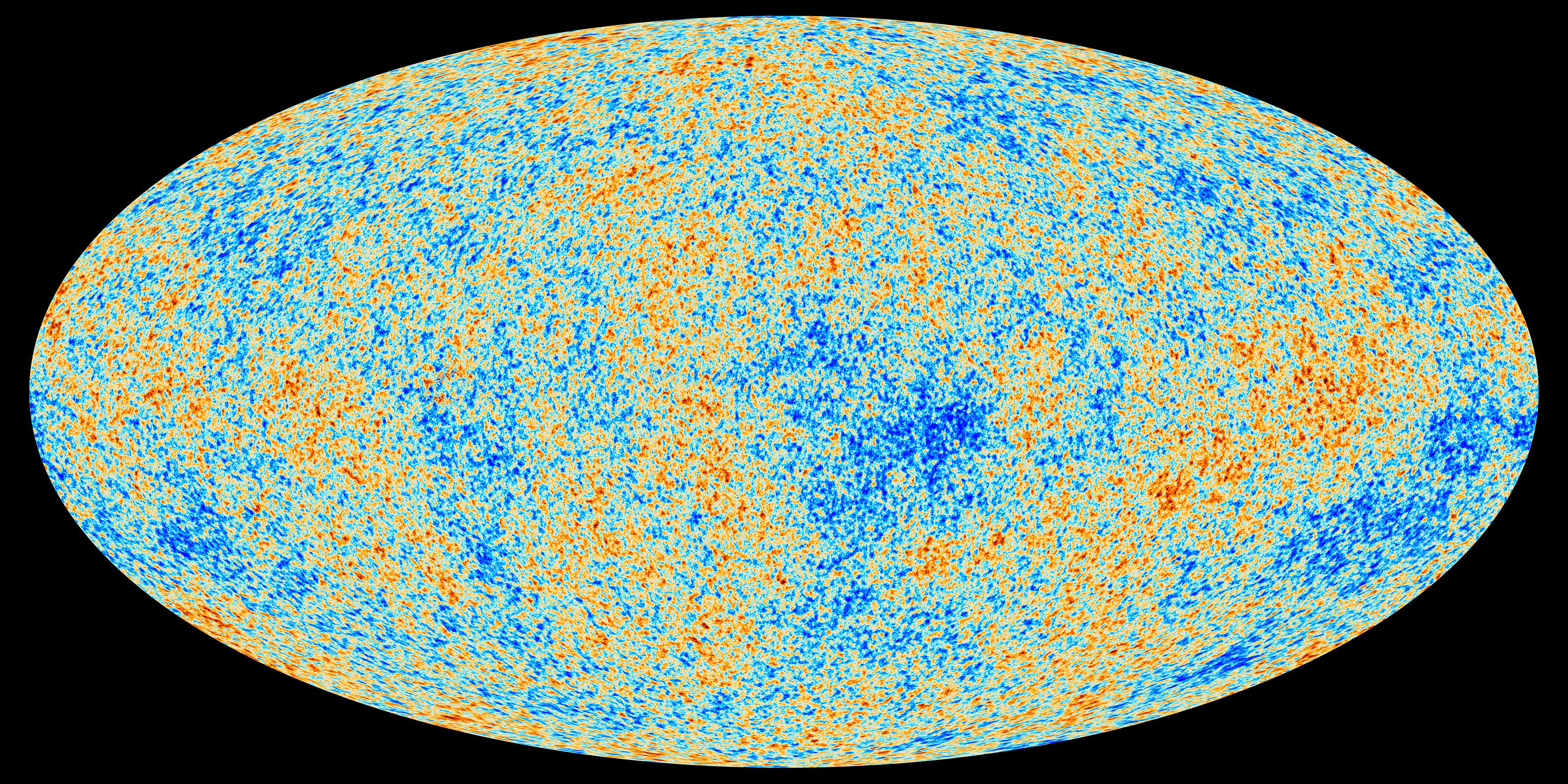
The Cosmic Microwave Background Radiation
The CMB is the glow from recombination. The photons of the time retain the temperature of gas at recombination: 3000 K. By the time those photons reach telescopes on Earth, the expansion of space has redshifted their wavelengths into microwave part of the electromagnetic spectrum. The CMB appears today to be about 2.7 K.
It is also the farthest we can peer back through time, because it was the first moment when the universe was completely transparent. Peering through the CMB is like trying to look through a blackout curtain.
The Dark Age
The radiation from recombination retains its temperature and is observable today as the CMB, but the gas continues to cool, all the way into infrared wavelengths. For 400 million years, the universe expands in darkness.

400 Million Years1: First Light or Cosmic Dawn
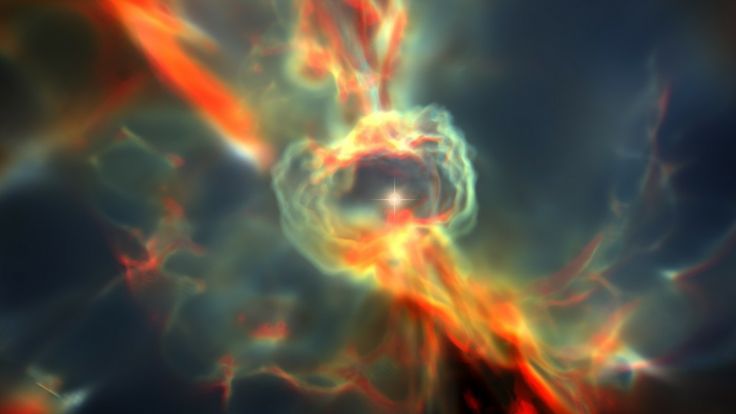
The first stars form from a mixture of almost no “metals” — astronomy jargon for elements heavier than helium. These stars are quite massive and bright, and lead very short, explosive lives.
Light dawns on a universe in chaos.
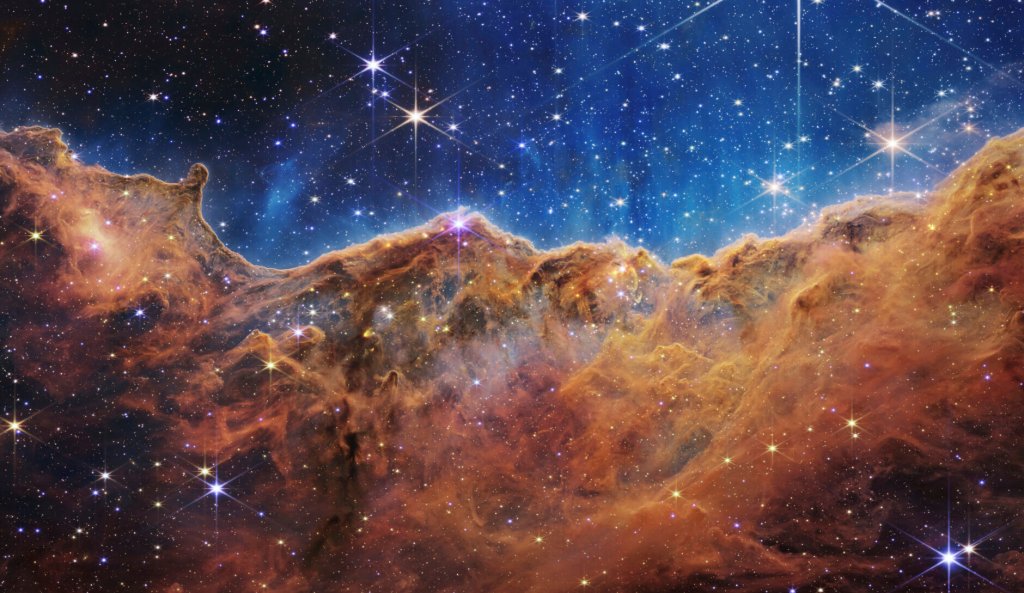
Re-ionization
Ultraviolet light from this violent burst of star formation re-ionizes the diffuse gas throughout the universe. This marks the beginning of a new age: the age of stars and galaxies.

670 Million Years
The earliest quasars — erupting supermassive black holes — can be observed.
It is theorized that these were able to form so early thanks to dark matter.

2 Billion Years: Gravity Dominates
The scale of the universe is small compared to the present day, and galaxies are closer together. Gravity dominates over dark energy, and the expansion of the universe slows down.
The rate of expansion decreases. The expansion itself does not stop.
8 Billion Years: Dark Energy Dominates
Expanding space carries galaxies far enough apart that gravity can no longer dominate. Dark energy overcomes gravity and causes the expansion to accelerate instead.

13.8 Billion Years: Present Day
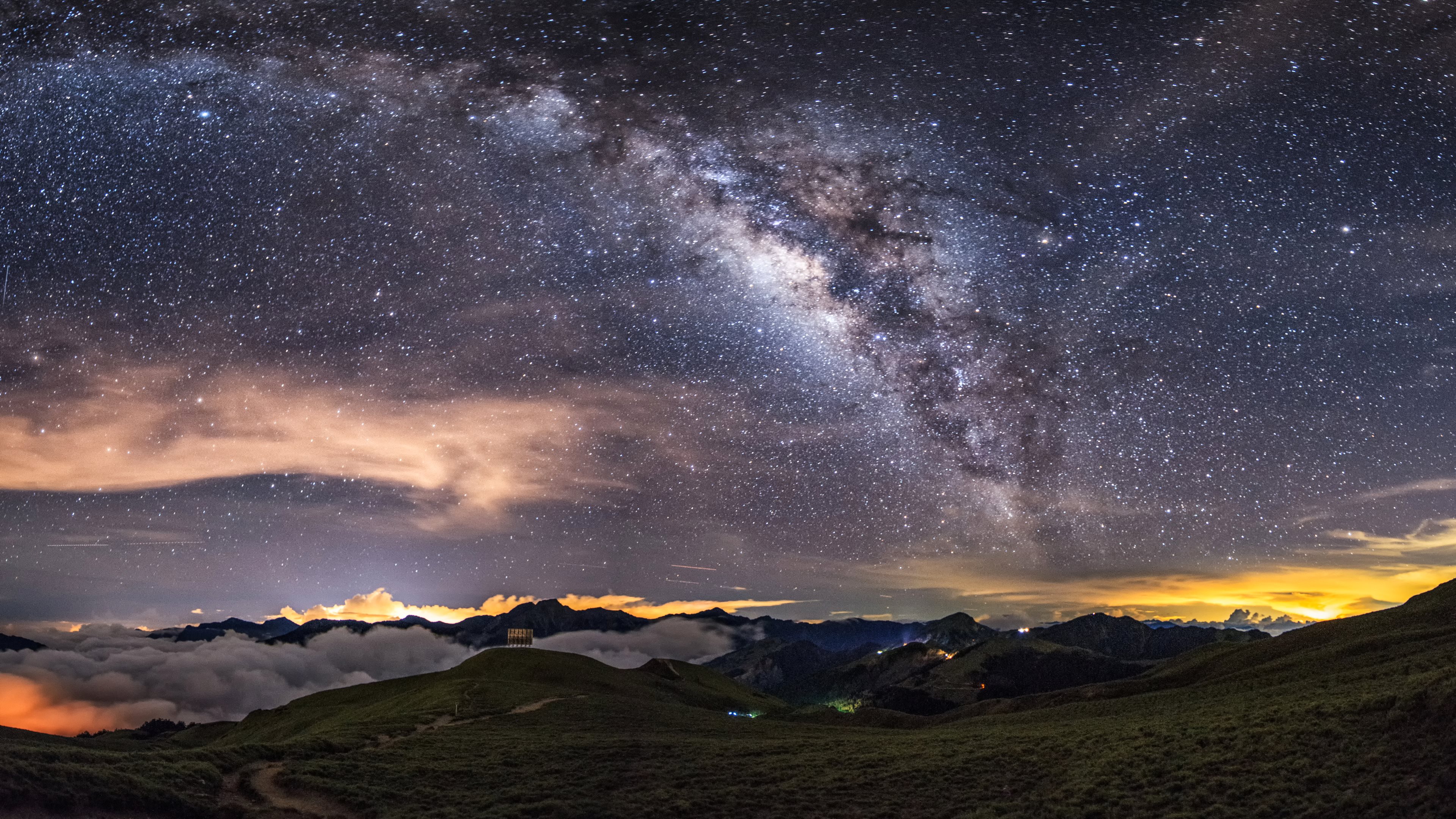
Today, we live in a universe full of galaxies. The farther out we look, the further back in time we see, and we can chart out our own cosmic history. Observations of distant galaxies reveal active mergers and eruptions; observations of galaxies closer to home generally appear more stable. But no matter where we look, there is something exciting to observe.





And there you have it: the story of the universe, from beginning to end!
Next up, I’ll take you through a different sort of timeline — one of human discovery, from the days of classical astronomy to modern cosmology.
After that, we’ll wrap up cosmology with our typical “Cosmos Demystified” umbrella post…and then, before we move on to the planetary sciences, I have a surprise in the works!
You’ll just have to wait and see 😉
- A caveat: the James Webb Space Telescope has observed galaxies that apparently formed as few as 290 million years after the Big Bang. The first stars couldn’t have formed after this. Clearly, we have something wrong. ↩︎










Did I blow your mind? 😉